 Blaine Siding
 Decking on Cherry Point Isn't the Same Job as Decking Ten Miles Inland
Cherry Point sits close enough to the water that homes here deal with a version of weather that inland Whatcom County properties simply don't see as often: salt-laden air rolling off the Strait of Georgia, wind-driven rain that gets pushed sideways into ledger boards and fascia, and a long wet season that turns any shaded or north-facing deck surface into a moss farm by late winter. A composite deck built to a generic spec sheet will survive here for a while. A composite deck built for this specific stretch of coastline holds up a lot longer, stays safer underfoot, and needs less babying to keep looking right.
This page is about that one job — composite decking for Cherry Point homes — and what separates a deck that's still solid in fifteen years from one that starts showing problems in five.
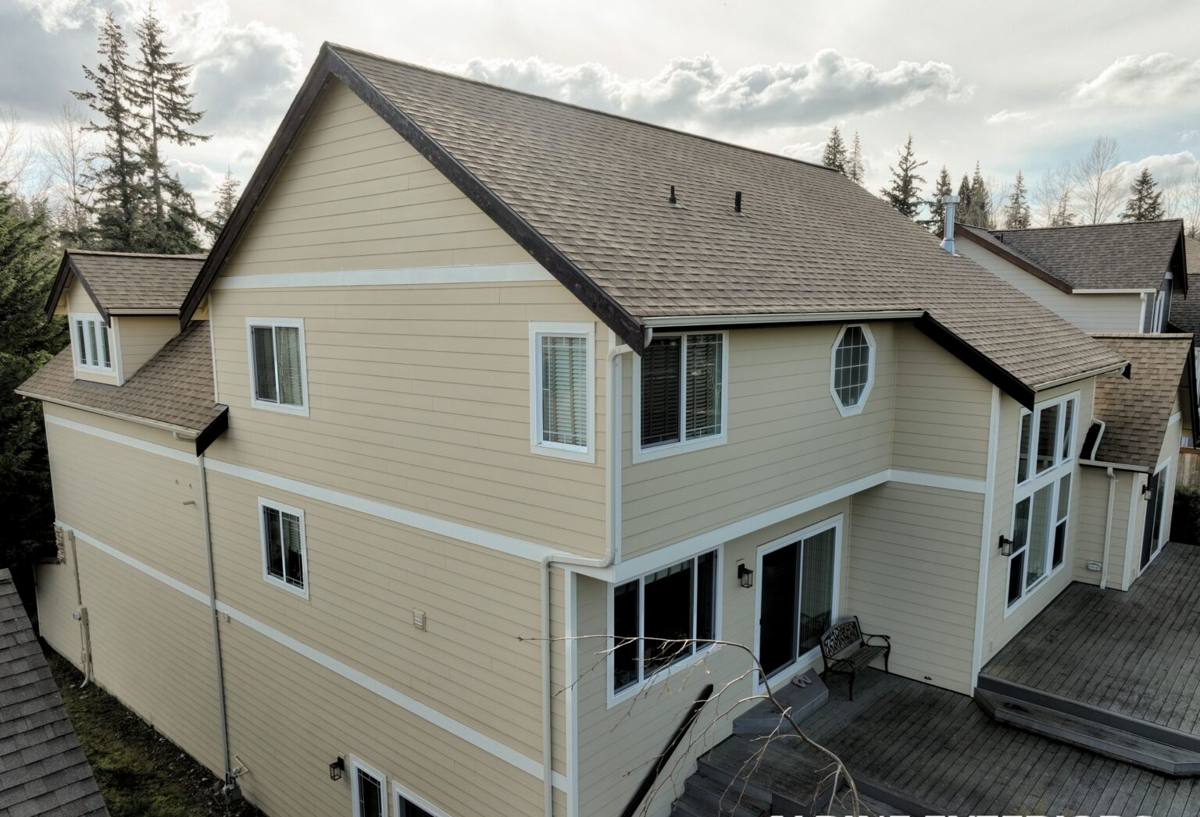
What the Local Climate Actually Does to a Deck
It helps to be specific about the mechanisms, not just the vague idea that "it's rainy here."
Salt Air
Airborne salt from the Strait doesn't just sit on the surface — it works its way into any exposed metal fastener, bracket, or ledger connector. Standard zinc-coated hardware corrodes noticeably faster this close to saltwater than it would twenty miles inland. Over years, that corrosion can weaken the connections holding the deck to the house long before the decking boards themselves show any wear.
Driving Rain
Storms coming off the water tend to arrive with real wind behind them, which pushes rain horizontally into places a calmer rain never reaches — up under rail caps, behind fascia boards, and into the ledger-to-house connection. If that joint isn't flashed correctly, water finds its way into the rim joist and wall framing behind it, and that's a rot problem hiding behind a deck that looks fine from the yard.
Moss Season
Whatcom County's wet months run long, and any deck surface that doesn't get much direct sun — common under mature trees or on the shaded side of a house — stays damp for extended stretches. Moss and algae take hold on textured or wood-grain composite surfaces just like they would on real wood, and a slick, moss-covered deck board is a genuine fall hazard, not just a cosmetic issue.
Why Composite Makes Sense Here — With Honest Caveats
Composite decking was designed to resist exactly the kind of moisture cycling this climate produces, which is why it's a sound choice for Cherry Point. It won't rot, splinter, or need annual staining the way a wood deck does. But "low maintenance" doesn't mean "no maintenance," and it doesn't mean every composite product performs the same way in salt air and constant damp. Cheaper, older-generation composite boards can absorb some moisture at cut ends and are more prone to surface mold in shaded, humid spots. Fully capped composite boards — with a polymer shell wrapping all four sides — handle this environment noticeably better than boards that are only capped on the top and sides.
We tell homeowners this plainly rather than upselling every job to the top-tier product: if your deck gets good sun and isn't heavily shaded, a mid-tier capped composite is often the right balance of cost and durability. If it's tucked under trees or on a north wall that stays damp most of the year, spending more up front on a fully capped board saves money on cleaning and replacement down the road.
What a Correct Installation Involves
The Substructure Comes First
Composite decking is only as good as what's underneath it. In this climate, we treat the substructure as the part of the job that actually determines the deck's lifespan. That means pressure-treated joists rated for ground contact where relevant, joist tape over the top of every joist to keep fasteners from sitting in a moisture trap, and hangers and hardware rated for coastal or high-corrosion environments — not the standard-grade hardware that's fine for a dry inland lot but starts pitting here within a few years.
Ledger Attachment and Flashing
The ledger board — where the deck attaches to the house — is the single most common source of hidden water damage on older decks we've opened up in this area. It needs proper flashing that directs water away from the house framing, not just caulk over the top, which fails silently over time. This is the step that's invisible once the deck is finished and the one most often done wrong on decks that were built to save time.
Ventilation and Drainage
A deck built low to the ground or against a foundation wall needs enough airflow underneath to let moisture escape instead of sitting there through the wet months. We grade and gap for drainage and, where the deck height allows it, build in ventilation so the underside isn't a permanently damp space that feeds moss and mildew back up through the boards.
Fastener and Hardware Choice
Given the salt air, we use corrosion-resistant fasteners and connectors as standard practice on Cherry Point jobs rather than treating it as an upgrade. It costs more up front than standard hardware and saves the homeowner from a deck that develops rust streaks and loosening connections well before the decking itself is due for replacement.
Composite vs. Wood vs. PVC — What Actually Matters for This Location
| Factor | Wood | Composite | PVC / Vinyl |
|---|---|---|---|
| Salt air resistance | Poor without frequent sealing | Good, especially fully capped boards | Very good |
| Moss/algae resistance | Low — needs regular cleaning and treatment | Moderate to good depending on board grade | Good, smoother surface sheds moisture |
| Upfront cost | Lowest | Mid-range | Highest |
| Long-term maintenance | Highest — annual staining/sealing | Low — periodic washing | Lowest |
| Typical appearance | Natural wood grain, fades and grays over time | Consistent wood-look color, holds up longer | More uniform, less wood-like look |
| Repair if damaged | Board-by-board replacement, easy to match | Board replacement straightforward, color matching improves each generation | Board replacement, limited color range |
For most Cherry Point homes, composite lands in the sweet spot: it costs less than PVC, requires far less upkeep than wood, and modern capped boards close most of the durability gap that used to separate composite from PVC. Wood still has a place for owners who specifically want that look and are willing to keep up with sealing on a coastal schedule — but that's a real, ongoing commitment in this climate, not a one-time task.
How We Approach a Cherry Point Deck Project
- Site visit and assessment — we look at sun exposure, tree cover, existing structure (if replacing a deck), and how exposed the site is to wind and salt spray off the water.
- Material recommendation — based on that exposure, we recommend a board tier and color rather than defaulting to whatever's easiest to sell.
- Substructure build or inspection — new framing is built to coastal-grade standards; if we're replacing decking over an existing structure, we inspect joists and the ledger connection before installing anything on top.
- Flashing and waterproofing — ledger flashing, joist tape, and drainage details are handled before a single deck board goes down.
- Decking installation — boards, hidden fasteners, and trim are installed per manufacturer spec, which matters for keeping any product warranty valid.
- Final walkthrough — we go over basic care for the specific product installed so you know what upkeep actually looks like for your deck.
Keeping a Composite Deck Right in This Climate
Composite decking cuts down maintenance dramatically compared to wood, but a few habits make a real difference in a salt-air, high-moss environment:
- Sweep off standing debris (leaves, needles, seed pods) regularly — trapped organic matter holds moisture against the board and feeds moss growth.
- Wash the deck surface a couple of times a year with a soft-bristle brush and a mild soap-and-water solution or composite-safe cleaner — avoid pressure washers on close settings, which can damage the cap layer.
- Rinse railings and hardware periodically, especially after storms, to reduce salt buildup on metal components.
- Check the gap between boards seasonally to make sure debris hasn't packed in and blocked drainage.
- Keep an eye on the underside and ledger area once a year if it's accessible — catching a flashing issue early is far cheaper than repairing rot damage later.
- Address moss on shaded areas promptly with a composite-safe treatment rather than letting it establish, since it's much easier to prevent than to remove once it's taken hold.
Common Problems We Find on Older Cherry Point Decks
When we're called out to look at an existing deck in this area — whether for repair, a rebuild, or a pre-sale inspection — the same handful of issues come up repeatedly:
- Rusted or corroding fasteners and brackets, often years before the decking material itself needs replacing.
- Soft or damaged framing near the ledger board, traced back to missing or failed flashing.
- Persistent moss or black staining on shaded sections that were never addressed early.
- Boards installed too tight together with no allowance for drainage, leading to standing water and premature wear.
- Older, non-capped composite boards showing surface fading or mold in ways newer capped products largely avoid.
Most of these trace back to decisions made during the original build — corners cut on hardware or flashing that don't show up as a problem for a few years. It's a good reminder that the visible decking is the easy part; the details underneath are what determine whether the deck is still solid a decade from now.
Why It Matters That We Already Work This Area
A crew that only occasionally works this close to the water tends to treat a Cherry Point deck the same as one built in a dry, inland neighborhood — standard hardware, standard flashing details, standard board selection. We build here regularly enough to know which corners of a property actually take the worst of the wind and salt spray, which board tiers hold up and which ones struggle in heavy shade, and which hardware upgrades are worth the extra cost versus which ones aren't necessary for a given site. That local pattern recognition is the difference between a deck that's specified correctly the first time and one that needs early repairs because it was built to a generic standard that doesn't quite fit this coastline.
Get a Straight Answer for Your Property
Every lot near Cherry Point handles wind, sun, and moisture a little differently, so the right decking specification for your home depends on the actual site — not a one-size-fits-all recommendation. If you're planning a new composite deck or replacing an aging one, we're happy to take a look, walk through what your specific exposure calls for, and give you a straightforward, no-pressure estimate using the form below.