 Blaine Siding
 Windows Built for Everson's Weather, Not Just Any Weather
Everson sits in a part of Whatcom County that puts real demands on a home's exterior. Between salt-laden air moving in off the water, long stretches of driving rain, and a moss season that seems to run most of the year, window assemblies here work harder than they do almost anywhere else in the state. A window that performs fine in a dry climate can fail quietly in this one — not with a dramatic leak, but with a slow buildup of condensation, a seal that gives out early, or a frame that starts absorbing moisture from the inside out.
When we talk about "energy-efficient windows" for an Everson home, we're not just talking about lower heating bills, though that's part of it. We're talking about a window system that's sealed, flashed, and specified correctly for a marine-influenced climate with heavy annual rainfall. Efficiency and moisture management aren't separate problems out here — they're the same problem, solved together.
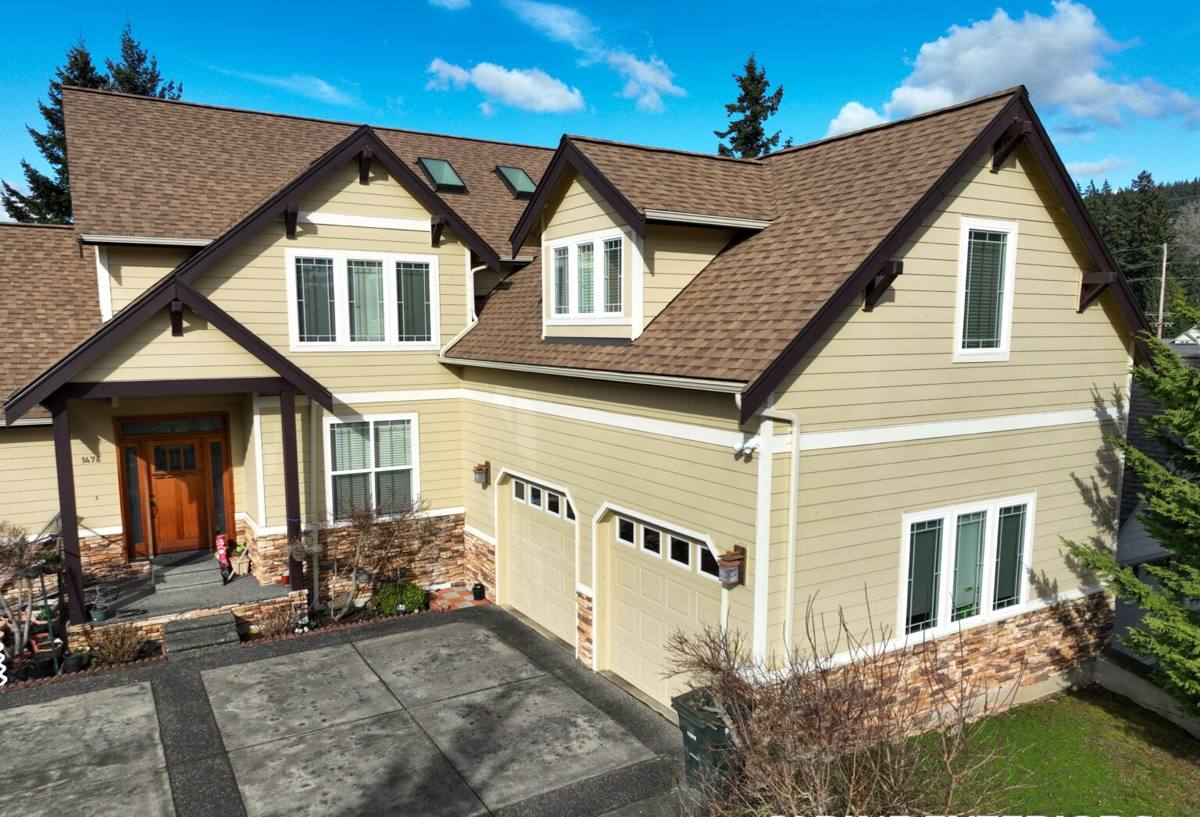
What "Energy-Efficient" Actually Means
The term gets used loosely, so it's worth being precise about what actually makes a window efficient, because the label on the sticker matters less than the numbers underneath it.
The Numbers That Matter
- U-factor — measures how much heat escapes through the window. Lower is better; this is the single most important number for our climate.
- SHGC (Solar Heat Gain Coefficient) — measures how much solar heat passes through the glass. Less critical here than in sunnier climates, but still worth checking on south- and west-facing walls.
- Air leakage rating — how much air passes through the assembly itself, independent of the glass. This is where cheap windows fall apart first in wind-driven rain.
- NFRC label — the independent rating that verifies the above numbers instead of relying on manufacturer marketing.
Beyond the Glass
Double-pane with a low-E coating and argon gas fill is the baseline we recommend for most Everson homes. Triple-pane can make sense on a north-facing wall or a bedroom near a busy road, but it adds weight and cost, and for most single-family homes here the return doesn't justify it. The bigger performance gap is almost always in the frame and the installation, not the glass package.
Signs Your Current Windows Are Working Against You
Most homeowners don't call us because they woke up one day wanting new windows. They call because something specific started bothering them. If any of the following sound familiar, it's worth having someone look:
- Condensation or fogging between the panes — the seal has failed and the gas fill is gone.
- A cold draft near the frame even with the window latched, especially during wind-driven rain.
- Visible moss or algae building up in the frame corners or on the sill, faster than on the surrounding siding.
- Wood trim around the window that's gone soft, discolored, or is peeling from the inside.
- Noticeably higher heating costs compared to similar-sized homes nearby.
- Single-pane glass, or aluminum frames with no thermal break — both common in older Whatcom County housing stock.
None of these mean the whole house needs new windows tomorrow. Sometimes it's one or two problem openings — often the ones facing prevailing weather — that are doing most of the damage while the rest of the house is fine for now.
Frame Materials: What Actually Holds Up Here
Frame material is where most of the long-term performance difference lives, and it's the decision homeowners ask us about most. Here's how the common options compare for a wet, salt-exposed climate like ours:
| Frame Material | Moisture Behavior | Maintenance | Typical Lifespan |
|---|---|---|---|
| Vinyl | Won't rot or corrode; seams are the weak point if welding quality is poor | Low — occasional cleaning | 20–30 years |
| Fiberglass | Excellent — dimensionally stable, doesn't expand/contract with moisture or temperature | Low | 30+ years |
| Wood / Wood-Clad | Good on the exterior if cladding is intact; vulnerable wherever cladding is breached or caulk fails | High — repainting, caulk checks | Varies widely with upkeep |
| Aluminum (no thermal break) | Corrodes over time in salt air; conducts cold and promotes condensation | Moderate | 15–20 years in this climate |
We don't push one material on every job. Vinyl and fiberglass cover the large majority of Everson-area replacements well, at different price points. Wood-clad has its place on homes where the look matters more than the maintenance cost, but we're upfront that it asks more of the homeowner over time — that's a real trade-off, not a knock on the product.
What a Correct Installation Actually Involves
The window unit itself is maybe half the equation. The other half is how it's tied into the wall assembly, and this is where a lot of problems get built into a house without anyone noticing for years.
Flashing and Water Management
Every opening needs proper flashing — at the sill, jambs, and head — installed in the right order (shingle-style, so water sheds outward at every layer) and integrated with the house's weather-resistive barrier. In driving rain, an opening that's caulked instead of properly flashed will eventually leak. It might take one season or five, but it will happen.
Insulation Around the Frame
The gap between the window frame and the rough opening needs to be filled with a low-expansion foam or backer rod and sealant — not stuffed with fiberglass batting, which does little to stop air movement and can hold moisture against the frame.
Sealing to the Exterior Cladding
Because we work in siding as much as windows, we pay particular attention to how the window trim meets the siding field — this is one of the most common failure points we find on older homes, and it's often invisible until moisture has already gotten behind the wall.
Our Process, Start to Finish
- On-site assessment. We look at each opening individually — sun exposure, weather exposure, current frame condition, and how the window ties into the existing siding and trim.
- Honest options, not upselling. We walk through frame material, glass package, and grid/style choices with real trade-offs explained, not just the most expensive option pushed first.
- Written estimate. Line-item pricing so you know what you're paying for — units, labor, disposal, and any trim or siding repair the job uncovers.
- Removal and inspection. Old units come out carefully so we can check the rough opening and sheathing underneath before anything new goes in.
- Correct installation. Flashing, insulation, and air-sealing done in the right sequence — not shortcuts hidden behind fresh trim.
- Final walkthrough. Every window operated, checked, and cleaned before we call the job done.
Why a Crew That Already Works in Everson Matters
Window replacement isn't a one-size-fits-all trade, and a crew that's worked across Whatcom County's coastal and near-coastal conditions brings something a traveling or out-of-area installer often doesn't: they've already seen how a particular frame material or installation shortcut holds up five or ten years into this specific climate, not a milder one.
That local experience shows up in small decisions — which sealants actually stay flexible through our wet season, how much clearance to leave for wood that will swell slightly with moisture, when a wall needs more than a window swap to fix the real problem. It also matters for permitting and code questions specific to the county, and for knowing which parts of a job typically get missed by crews unfamiliar with local building patterns.
Getting the Most Life Out of New Windows Here
Energy-efficient windows are a long-term investment, and a little upkeep protects that investment in a climate that doesn't give anything a break. A short annual routine goes a long way:
- Clear moss and debris from sills and tracks before it holds moisture against the frame.
- Check exterior caulk lines each spring for cracking or separation.
- Wipe down hardware and weatherstripping to keep seals making full contact.
- Watch for condensation between panes as an early warning of seal failure.
- Keep gutters and downspouts clear so runoff isn't sheeting directly over upper-story windows.
What Drives the Cost of a Window Project
Pricing varies by frame material, glass package, window size and style, and how much flashing or trim repair a given opening needs once the old unit comes out. A single-window replacement in good condition is a different job than a whole-house upgrade on a home with deferred maintenance around the openings — and we won't know which situation you're in until we've actually looked. We price every job after that on-site look, not off a phone estimate, because the condition behind the old trim is often the real cost driver, not the window itself.
If your Everson-area home has windows that are drafty, fogged, or just past their best years, we're glad to come take a look and give you a straight answer on what it would take to fix it — no pressure, no hard sell. Use the form below to request a free estimate.