 Blaine Siding
 Why California Creek Siding Wears Differently Than Siding Inland
California Creek sits close enough to Semiahmoo Bay and Drayton Harbor that homes here take on a mix of weather stresses that inland Whatcom County properties simply don't deal with as often. Salt-laden air moves in off the water and settles on exterior surfaces, driving rain comes in sideways during fall and winter storms and finds every gap in a wall assembly, and the region's long, cool, damp stretch from October through May keeps moss and algae active on siding for most of the year. None of these forces destroy siding overnight. They work slowly, at the seams, the fastener lines, the trim joints, and the low spots where water sits instead of shedding.
That slow, cumulative damage is exactly why siding repair in this neighborhood has to be diagnosed carefully rather than patched on sight. A soft spot near a window trim board might be a surface issue, or it might be telling you that water has been getting behind the cladding for a year or more. Getting that distinction right is the difference between a repair that lasts and one you're paying for again in eighteen months.
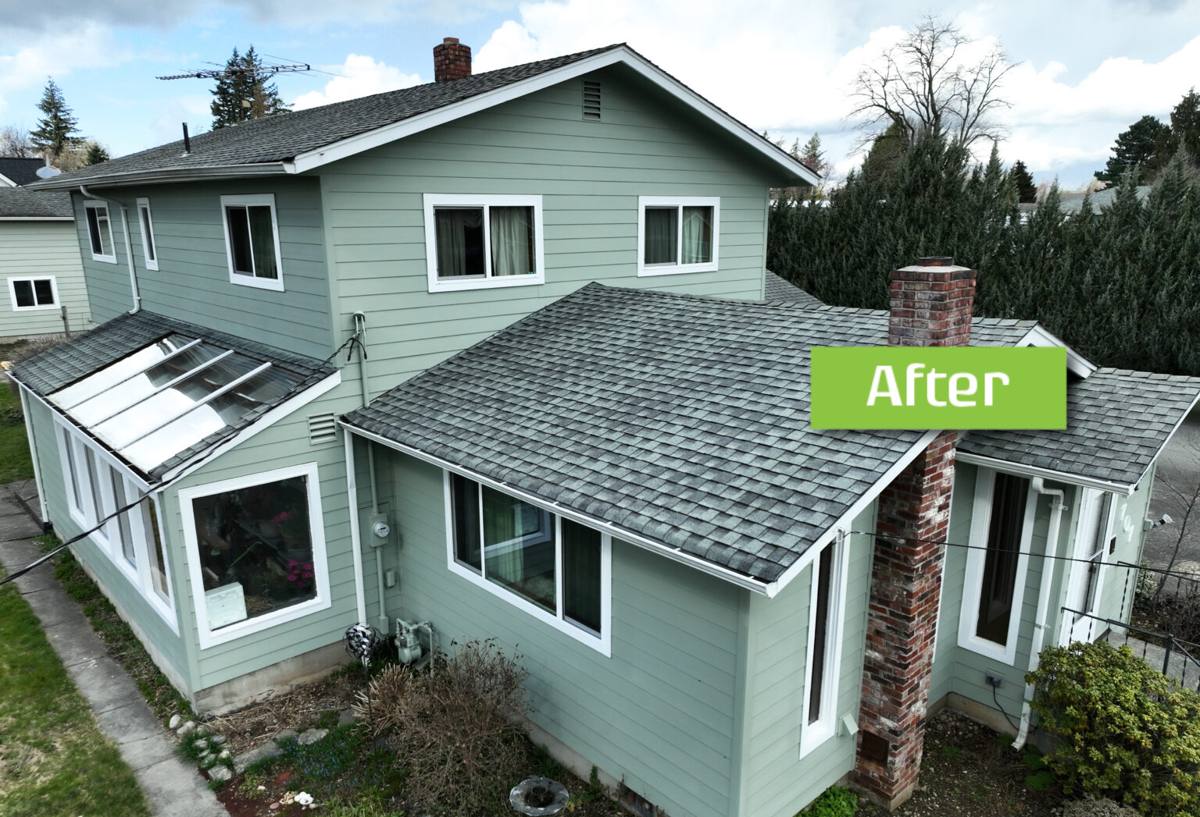
Common Siding Problems We See Around California Creek
Every coastal Whatcom County neighborhood has its own pattern of wear, and California Creek's tends to show up in a few predictable places:
- Moss and algae buildup on north-facing walls and anywhere siding stays shaded and damp longer than the rest of the house.
- Caulk failure around window and door trim, where UV exposure and constant damp-dry cycling break the seal faster than manufacturers' warranties assume.
- Fastener and panel movement from repeated wetting and drying, especially on older wood or engineered wood siding that wasn't detailed for this climate.
- Soft or delaminating trim and panel edges where water has been wicking in at a cut end, seam, or corner for longer than the homeowner realized.
- Salt film and pitting on fasteners or trim hardware, particularly on homes with a more direct exposure toward the water.
- Impact damage from storm debris, ladders, or landscaping equipment that's cracked or chipped a panel.
Some of these are cosmetic. Some are structural warnings. Part of a proper repair visit is telling you honestly which is which.
What a Correct Siding Repair Actually Involves
It starts with finding the water, not just the damage
A repair that only addresses the visible crack or stain is a temporary fix. Before we touch a panel, we look at how water is moving around that section of the wall — where it's landing, where it's supposed to shed, and where it's getting trapped instead. That usually means checking flashing above windows and doors, the condition of house wrap or building paper behind the siding where it's accessible, and whether the original installation left proper clearance at the bottom of the wall and around penetrations like hose bibs, vents, and light fixtures.
Then the repair itself
Depending on what we find, a repair can mean:
- Removing and replacing a damaged section of siding, matched as closely as possible in profile and reveal.
- Re-flashing a window, door, or penetration where water intrusion originated.
- Cutting out and properly re-caulking failed joints with a sealant rated for marine and coastal exposure.
- Addressing the substrate underneath — replacing rotted sheathing or trim, not just covering it back up.
- Treating and cleaning moss and algae growth, and correcting the moisture or shade conditions that let it take hold in the first place.
A repair that skips the diagnostic step and goes straight to patching is the single most common reason siding repairs fail twice in this climate.
Repair or Replace? How We Help You Decide
Not every problem calls for a full re-side, and not every problem should be patched. The right call usually comes down to how much of the wall is affected, what's underneath it, and how old the existing siding already is.
| Situation | Usually a Repair | Usually a Replacement |
|---|---|---|
| Isolated cracked or impact-damaged panel | Yes | No |
| Failed caulk joints, otherwise sound siding | Yes | No |
| Rot or soft sheathing found behind more than one section | No | Yes |
| Moss/algae staining with sound material underneath | Yes | No |
| Siding is original wood or engineered wood, 15+ years old, multiple failure points | Sometimes short-term | Usually the better long-term value |
| Repeated repairs to the same wall over several years | No | Yes |
We'll always tell you when a repair is the honest answer, even when a full replacement would be the bigger job for us. If we ever recommend replacement over repair, it's because the numbers or the moisture damage genuinely point that way, not because it's the larger sale.
Why We Repair With — and Recommend — James Hardie Fiber Cement
We install James Hardie fiber cement siding exclusively, and that shows up in how we handle repairs too. When a homeowner already has Hardie siding, repairs are usually straightforward: fiber cement doesn't absorb water the way wood or wood-composite products do, it doesn't swell or delaminate at cut edges the same way, and matching ColorPlus-finished panels keeps the repair close to invisible.
When a homeowner has a different siding material — vinyl, primed wood, engineered wood, or another fiber cement brand — we'll still repair what's there when a repair is the right call. But if the damage points toward a larger problem, or the material is reaching the end of what it can reasonably be patched, we're upfront that our long-term recommendation is James Hardie. Salt air and constant moisture cycling are hard on materials that rely on paint film or factory coatings that weren't engineered for marine exposure, and on products that can swell or soften once water gets past the surface. Hardie's fiber cement is non-combustible, holds its factory ColorPlus finish far longer under UV and salt exposure than field-applied paint typically does, and its HZ5 product line is specifically engineered for the kind of freeze-thaw and moisture-cycling climate California Creek sits in. That's why it's the only product we put back on a wall — not because every alternative is bad, but because it's the one we're willing to stand behind with our own labor and a manufacturer warranty that's actually transferable to the next owner.
What this means for a repair estimate
- If your existing siding is Hardie, we can typically match panel profile, reveal, and color closely enough that the repair blends in.
- If your existing siding is a different material and the repair is minor, we'll repair it in kind and tell you honestly how much life is likely left in it.
- If the repair is really a symptom of a bigger moisture or material problem, we'll lay out what a full Hardie re-side would cost and let you weigh it against ongoing repair costs — no pressure either way.
Our Process for a California Creek Repair Call
- On-site inspection. We walk the affected walls, check flashing and trim, and look for moisture behind the siding wherever we can safely access it.
- Honest diagnosis. You get a plain-English explanation of what's actually wrong — not just what's visible from the ground.
- Written scope and estimate. You'll know exactly what's being repaired, what material is being used, and what it costs before any work starts.
- The repair. We fix the underlying cause first — flashing, sealant, substrate — then the visible siding.
- Final walkthrough. We show you what was done and what to watch for going forward, especially around moss-prone or shaded areas.
Because we already work this stretch of Whatcom County regularly, we're familiar with how homes here are typically built, what the exposure looks like on the water-facing sides, and which trouble spots tend to repeat from one property to the next. That local pattern recognition speeds up the diagnosis and helps us catch problems a crew unfamiliar with the area might miss on a first look.
What Drives the Cost of a Siding Repair Here
| Factor | Why It Matters |
|---|---|
| Extent of water intrusion behind the siding | Hidden rot or wet sheathing adds labor beyond the visible panel |
| Height and access | Second-story or hard-to-reach wall sections take longer and need more equipment |
| Material match | Matching an existing Hardie color/profile is simpler than blending an older or discontinued product |
| Number of affected areas | Multiple small repair zones across a house cost differently than one contained section |
| Flashing and trim work required | Re-flashing a window or door adds scope beyond simple panel replacement |
We won't quote a repair over the phone with any real accuracy — too much depends on what's happening behind the siding, which you can't see from the driveway. A short on-site visit gets you a number you can actually rely on.
Maintenance Between Repairs: Keeping California Creek Siding Ahead of the Weather
A good repair buys you time, but a few habits stretch that time further in this climate:
- Rinse moss and algae off siding gently at least once a year, especially on shaded or north-facing walls.
- Keep gutters clear so overflow isn't running down the wall behind trim boards.
- Trim back landscaping that keeps a wall section damp and shaded longer than the rest of the house.
- Re-caulk visibly failed joints promptly rather than waiting for water to find its way behind the siding.
- Walk your exterior after major windstorms and check for cracked panels, loose trim, or debris impact.
None of this replaces a professional repair when there's real damage, but it keeps small issues from becoming big ones between visits.
Why Hiring a Crew That Already Works California Creek Matters
Siding repair is detail work, and the details that matter change by climate and by neighborhood. A crew that mostly works dry, inland regions may not think twice about a caulk joint or a flashing detail that's genuinely load-bearing against the kind of driving rain and salt exposure California Creek gets. A crew that already services this part of Blaine and the surrounding Whatcom County coastline has seen how these specific conditions play out on real walls, and knows which shortcuts don't hold up out here — even if they hold up fine somewhere else.
That local familiarity, combined with sticking to one product system we know inside and out, is what lets us give you a straight answer on repair versus replace instead of a sales pitch dressed up as a diagnosis.
If you're seeing moss buildup, failing caulk, soft trim, or storm damage on your siding, we're glad to take a look. Reach out for a free, no-pressure estimate using the form below.