 Blaine Siding
 Building New in California Creek Means Building for the Weather You Actually Get
California Creek sits close enough to the water and to open farmland north of Blaine that new construction here takes a different kind of weather beating than a house built a few miles inland. Salt-laden air off the Strait and Drayton Harbor works into unprotected metal and finishes over time. Driving rain off winter storms hits window walls sideways, not just straight down, which means water intrusion problems usually start at the edges of an opening, not the middle of the glass. And Whatcom County's long, damp shoulder seasons keep exterior surfaces wet for weeks at a stretch, which is exactly the kind of environment moss, algae, and slow rot organisms need to get established. None of that is a reason to worry about building here — it's just the baseline you design around.
New-construction window installation is the one point in a build where you get to set that baseline correctly, before siding, trim, and interior finishes make corrections expensive. Get the window opening right at rough-in, and the house stays dry for decades. Get it wrong, and you're chasing a leak behind finished walls five or ten years down the road.
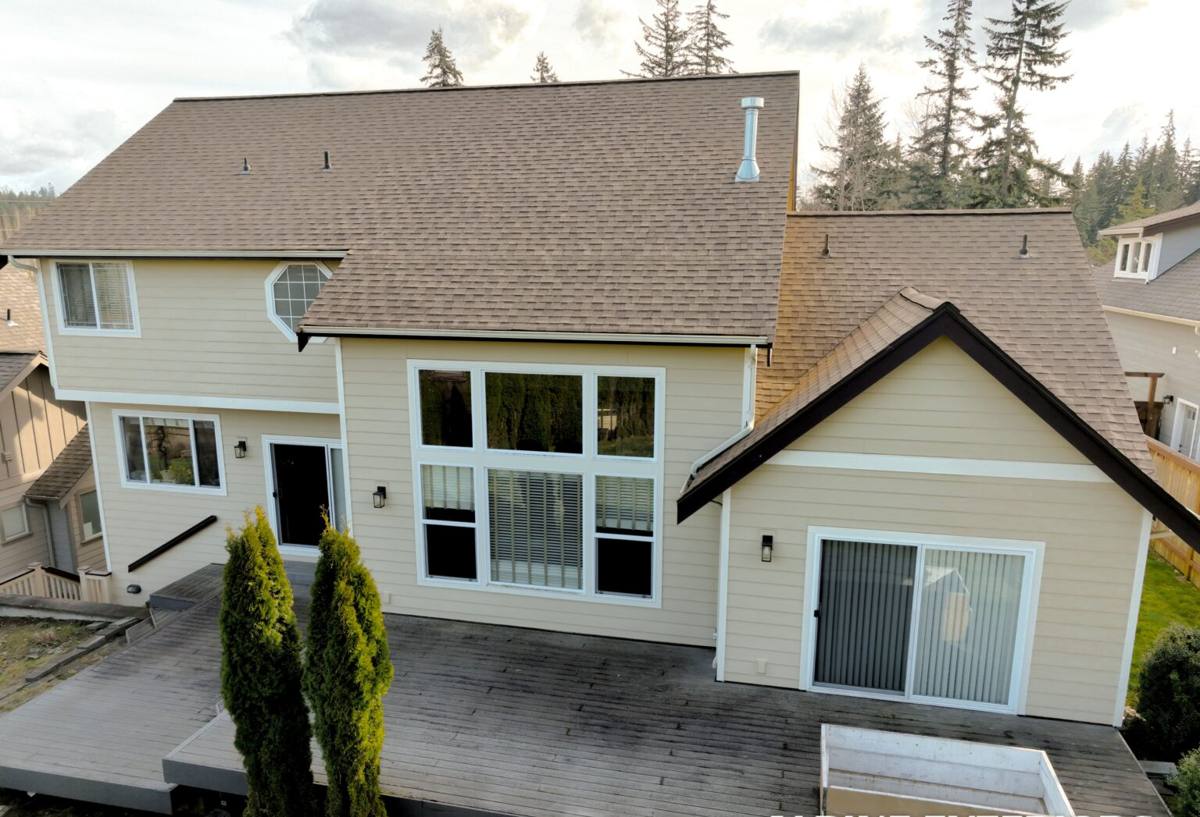
New Construction vs. Replacement: Why the Job Is Different
Homeowners sometimes assume window work is window work. It isn't. Replacement windows go into an opening that's already flashed, wrapped, and sided — the installer is working with what's there, often through a smaller access point, and matching an existing look. New-construction windows go into a bare, framed opening before the weather barrier and siding are on. That's a real advantage: it means the flashing, sill pan, and water management details can be built correctly from the studs out, layered in the right order, with nothing hidden or worked around.
The trade-off is that new-construction work has to be sequenced correctly with the rest of the shell. Windows go in at a specific point in the build — after sheathing and house wrap, before siding — and every trade around that window (framer, wrap installer, siding crew) needs to hand off clean work. A window installed out of sequence, or installed to a rough opening that wasn't framed square and true, causes problems that show up later as air leaks, sticking sashes, or water stains at the interior sill.
What "Correct" Looks Like on Paper
A properly installed new-construction window follows water-shedding order, sometimes called shingle-style layering, so that any water that gets past the exterior cladding is directed out and down, never trapped behind the wall. In practice that means:
- A sloped sill pan at the bottom of the rough opening, so bulk water drains outward instead of pooling on the sill
- Self-adhered flashing tape at the sill and jambs, lapped in the correct order
- The window's nailing fin sealed and fastened per the manufacturer's instructions — not just nailed and caulked
- Head flashing integrated over the top of the window, under the house wrap above it
- House wrap lapped over the flashing at the top and sides, shingle-fashion, so water always runs over the next layer down
- Backer rod and a quality exterior sealant at the trim-to-siding joint, sized for the gap it's filling
Skip or shortcut any one of these steps and the window can look fine for years while water is already working its way into the wall assembly behind it.
What California Creek's Climate Adds to That Checklist
Salt Air and Wind-Driven Rain
Proximity to the water means airborne salt settles on exterior surfaces and accelerates corrosion on unprotected fasteners, hardware, and some window frame components. It also means storms tend to drive rain at an angle rather than straight down, which puts more load on head flashing and jamb flashing than a purely inland site would see. We pay particular attention to head flashing laps and sealant joints on these builds, since that's where wind-driven rain finds any weakness first.
The Long Moss Season
Whatcom County's wet season runs long, and shaded or north-facing exterior surfaces can stay damp for extended stretches. That doesn't affect the glass or frame directly, but it does affect trim, sills, and any wood components nearby — damp wood trim is what moss and algae actually colonize. Detailing the sill and trim so water sheds cleanly away from the window, rather than sitting on a flat horizontal surface, keeps that moss growth from ever getting a foothold near the window opening.
Wind Exposure
Open exposure near the water and surrounding farmland can mean higher sustained wind loads than a more sheltered inland lot. That's a factor in window selection — sizing, glazing, and fastening schedule all need to account for the actual exposure of the lot, not a generic assumption.
Choosing the Right Window for the Site
There's no single "best" window material — the right choice depends on budget, the home's design, and how exposed the specific opening is. Here's how the common options compare for a build in this area:
| Material | Strengths in This Climate | Trade-Offs |
|---|---|---|
| Vinyl | Good moisture resistance, no corrosion risk from salt air, lower cost, low maintenance | Can flex on very large openings; color and trim options are more limited than clad wood |
| Fiberglass | Very stable in temperature swings, strong, holds paint and finish well, handles moisture without warping | Higher upfront cost than vinyl |
| Aluminum-clad wood | Warm wood interior look with a weather-resistant exterior shell | Cladding seams and interior wood need attention to detail during install to keep moisture out long-term; higher maintenance over the home's life |
| Aluminum (uninsulated) | Strong, slim sightlines | Poor thermal performance and higher corrosion exposure in salt air unless properly finished — we don't recommend this for exterior work this close to the water |
For most California Creek builds, vinyl or fiberglass cover the range of budgets and performance needs well. Clad-wood windows can be a great fit on a design-forward home, but we're upfront that they carry a higher long-term maintenance commitment in a marine, moss-prone climate — that's a trade-off we lay out honestly rather than talk around.
How We Approach New-Construction Window Installs Here
1. Pre-Install Coordination
We walk the framed openings with the builder or homeowner before windows arrive, checking that rough openings are square, plumb, and sized correctly for the ordered units. Catching a framing issue before the window shows up on site is far cheaper than discovering it during install.
2. Sill Pan and Flashing First
Every opening gets a sloped sill pan and properly lapped flashing before the window ever goes in. This is the step that's easiest to rush and most responsible for leaks down the road, so we don't shortcut it regardless of schedule pressure.
3. Setting and Fastening
The window is set plumb, level, and square in the opening, shimmed correctly so the frame isn't under stress, and fastened per the manufacturer's schedule — which matters for both the warranty and the unit's actual wind resistance.
4. Integration With the Weather Barrier
House wrap gets lapped over the flashing in the correct shingle order, and all seams are taped or sealed before the siding crew moves in behind us. We coordinate directly with the general contractor's schedule so there's no gap where an opening sits exposed to weather.
5. Final Check
Before we consider a window done, we check operation (smooth open, close, and lock), confirm exterior sealant joints are clean and continuous, and photograph the flashing detail for the file — useful documentation if anything ever needs to be referenced later.
Common Problems We Get Called to Fix
A good share of the repair calls we get on newer homes in this area trace back to a handful of recurring issues from the original install:
- Sealant used in place of proper flashing, rather than as a secondary line of defense behind it
- Flashing lapped in the wrong order, so water is directed behind the wrap instead of over it
- Rough openings that were slightly out of square, leaving the window under stress and hard to operate
- Sill trim installed flat instead of sloped, giving water and debris a place to sit and moss a place to start
- Fastening that skipped the manufacturer's schedule, reducing the window's actual wind resistance
Every one of these is preventable at the time of install and expensive to fix later, once siding and interior finishes are covering the evidence.
Why It Helps to Hire a Crew That Already Works California Creek
A window installer who's worked this specific pocket of Whatcom County already knows the exposure profile — how much wind and driving rain a given lot orientation actually sees, where moss tends to take hold on trim, and how builders in the area typically sequence wrap and siding. That local familiarity shows up in small decisions: how tight to run a flashing lap on a west-facing wall, whether a particular sill detail needs extra attention given a lot's exposure, how to schedule around the area's wet stretches so an opening isn't sitting open during a storm system. None of that replaces good technique, but it does mean fewer surprises and fewer callbacks.
We also work these builds knowing that a new-construction window install isn't an isolated task — it has to hand off cleanly to whatever wrap and siding crew comes next, and it has to hold up to the specific weather this area gets, not generic weather. That's the standard we hold every opening to.
Maintaining New Windows Once They're In
New-construction windows are largely maintenance-free early on, but a little seasonal attention keeps them performing for the long run in this climate:
- Rinse salt residue off frames and glass periodically if the home has direct water exposure
- Check exterior sealant joints once a year for cracking or separation, especially after the first year of settling
- Clear debris from sills and tracks before the wet season so water has a clear path to drain
- Watch for early moss or algae growth on trim and address it before it spreads — a sign that a surface is staying wetter than it should
- Test operation of hardware annually; stiff or sticking sashes can indicate a frame that's shifted slightly and is worth a quick check
If you're planning new construction or an addition in the California Creek area and want windows installed the right way the first time, we're happy to take a look at your plans and walk the site. Reach out for a free, no-pressure estimate using the form below.