 Blaine Siding
 Storm Damage Looks Different on a Blaine Harbor Roof
Homes near Blaine Harbor take on a combination of stress that inland Whatcom County roofs rarely see all at once. You've got wind coming straight off the water with nothing to slow it down, salt-laden air that works on metal fasteners and flashing year-round, and a rain season that doesn't let up long enough for a roof to fully dry out between storms. Add in the moss that thrives in that damp, shaded environment, and you have a roof that ages on a different timeline than one a few miles inland.
That matters when a storm rolls through. The same wind event that just knocks a few shingles loose on a sheltered inland roof can peel back a whole section of underlayment on a harbor-facing slope, drive rain sideways under flashing that would otherwise hold, or finish off a ridge cap that's already been quietly corroding from salt exposure for years. Storm damage repair here isn't just patching what broke — it's understanding what the storm exposed that was already weakened.
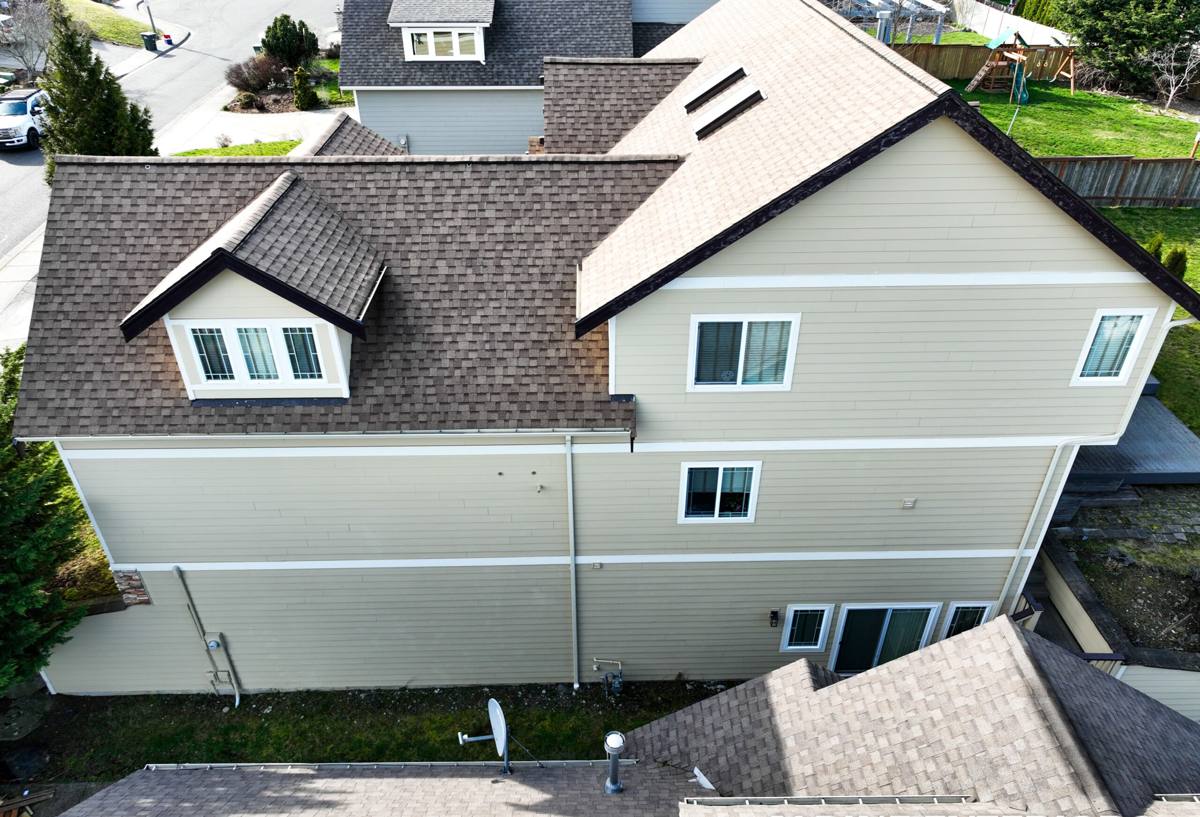
What We're Actually Looking For After a Storm
Not all storm damage is obvious from the ground, and not everything that looks dramatic is actually urgent. Part of doing this job right is telling the difference.
Wind Damage
Lifted, cracked, or missing shingles are the most visible sign, but wind damage often shows up first at the edges — ridge caps, rake edges, and any spot where the roofing material has an exposed lip for wind to catch. On Blaine Harbor homes we also check valleys and any roof-to-wall transitions closely, since wind off the water rarely comes straight on and tends to find these seams.
Water Intrusion
Wind-driven rain doesn't need a hole to get in — it just needs a gap, and gaps open up fast when flashing has been corroding quietly in salt air. Water intrusion after a storm can show up as staining on an attic deck, a soft spot in decking, or nothing visible at all for weeks until it dries out and reveals itself as a stain on a ceiling.
Impact and Debris Damage
Branches, loose gutter sections, or wind-carried debris can bruise or puncture roofing material without leaving an obvious hole. Impact damage is one of the easier things to miss on a quick look and one of the more common things we find once we're actually up there.
Moss-Weakened Areas
A storm often doesn't create damage so much as it finishes off a spot moss has already been working on. Moss holds moisture against the roof surface, and shingles or shakes that have been sitting under a moss mat for a season or two are softer and more vulnerable than the rest of the roof. Storms tend to find those spots first.
How We Approach a Storm Damage Repair
1. Inspection, Not Guesswork
We walk the roof — not just look at it from the driveway. Photos and video from ground level miss too much, especially on the kind of granular, seam-level damage that salt air and wind cause. We check flashing, fasteners, decking condition, and ventilation while we're up there, because a storm repair that ignores the surrounding condition of the roof is a repair that fails again at the next storm.
2. Clear, Honest Scope
We tell you what's storm damage, what's pre-existing wear the storm exposed, and what's cosmetic versus what actually needs attention. Not every lifted shingle needs full replacement, and not every water stain means the roof failed — sometimes it's a single flashing detail. We'd rather explain the real scope than pad a repair or, just as bad, undersell one.
3. Repair That Matches the Environment
A storm repair on a harbor-facing roof should hold up to the next storm, not just look right for a season. That means using fasteners and flashing suited to salt air exposure, sealing seams the way they should be sealed rather than the fastest way to close a work order, and matching materials so the repair doesn't become the next weak point.
4. Documentation
If you're filing an insurance claim, we document damage clearly with photos and a written scope before and after the work, so you have what you need to support the claim without having to reconstruct the story yourself later.
Repair Scope by Damage Type
| Damage Type | Typical Cause | Common Fix |
|---|---|---|
| Lifted or missing shingles | Wind uplift at edges/ridges | Localized shingle/cap replacement, refastening |
| Corroded flashing | Salt air exposure over time, exposed by storm | Flashing replacement at valleys, walls, penetrations |
| Soft or stained decking | Water intrusion through a compromised seam | Decking repair/replacement plus source repair |
| Impact bruising or punctures | Wind-carried debris | Spot repair or section replacement depending on depth |
| Moss-softened shingles | Prolonged moisture retention, weakened by storm | Moss removal, treatment, and replacement of affected material |
This is a general guide, not a diagnosis — the right fix always depends on what we actually find on your specific roof.
Why Moss and Salt Air Change the Math on Timing
In a lot of the country, a minor storm repair can wait a few weeks without much consequence. In this environment, that window is shorter. A gap in flashing or a lifted shingle left open during Whatcom County's wetter months gives moisture repeated chances to get underneath, and moss doesn't need much encouragement to move into a damaged spot and start holding water there. What starts as a small repair can turn into a decking replacement if it sits through a few more rain events.
This is also why we look at more than just the storm damage itself. If we see moss buildup, granule loss, or early flashing corrosion nearby while we're up repairing storm damage, we'll point it out. It's information you should have, not an upsell — what you do with it is your call.
Insurance and Storm Damage Claims
Most homeowner policies cover sudden storm damage — wind, impact, wind-driven rain — though coverage details, deductibles, and what counts as "sudden" versus "gradual deterioration" vary by policy. We're not your insurance adjuster and we won't tell you what your policy covers, but we can give you an honest, documented account of what the roof looked like and what we found, which is the piece homeowners usually need most when a claim comes down to a judgment call about cause.
A few things worth knowing going in:
- Photograph visible damage yourself as soon as it's safe to do so, before any tarping or cleanup
- Avoid full repairs before your adjuster has seen the damage, if you can safely wait — temporary protection is different from permanent repair
- Keep any receipts for emergency measures like tarping, since those are often reimbursable
- Ask your insurer directly whether gradual damage like moss deterioration is treated differently from sudden storm damage in your specific policy
After the Storm: What to Check Before You Call
Not every storm requires a full inspection, but a quick, safe check from the ground can help you decide how urgent it is.
- Look for shingle pieces, granules, or flashing fragments in the yard or gutters
- Check gutters and downspouts for new sagging, separation, or debris blockage
- Watch ceilings and attic spaces over the following week for new staining, since leaks don't always show up immediately
- Note any branches or debris resting on the roofline that should be cleared carefully
- Avoid climbing onto the roof yourself, especially right after a storm when surfaces are wet and footing is unreliable
Why a Local Blaine Harbor Crew Matters Here
A roofing crew that mostly works dry, inland roofs doesn't see salt air corrosion or harbor wind patterns often enough to have a real feel for them. A crew that regularly works Blaine Harbor knows which details tend to fail first in this exposure, what a normal amount of moss growth looks like versus a problem developing underneath it, and how the wind typically moves across roofs this close to the water. That familiarity shows up in where we look first, not just in how we fix what we find.
It also means we're not learning the neighborhood on your dime. We already know Whatcom County's storm season, we already know what harbor-facing exposure does to fasteners and flashing over a few winters, and we bring that experience to every inspection instead of starting from scratch.
Get an Honest Look at the Damage
If a recent storm left you with lifted shingles, a stain that wasn't there before, or just a nagging feeling you should have someone check the roof, we're glad to take a look. The estimate is free, there's no pressure to act on it, and you'll get a straight answer about what's storm damage, what's wear, and what actually needs doing. Use the form below to get started.