 Blaine Siding
 Why Blaine Harbor Siding Takes More Punishment Than Most
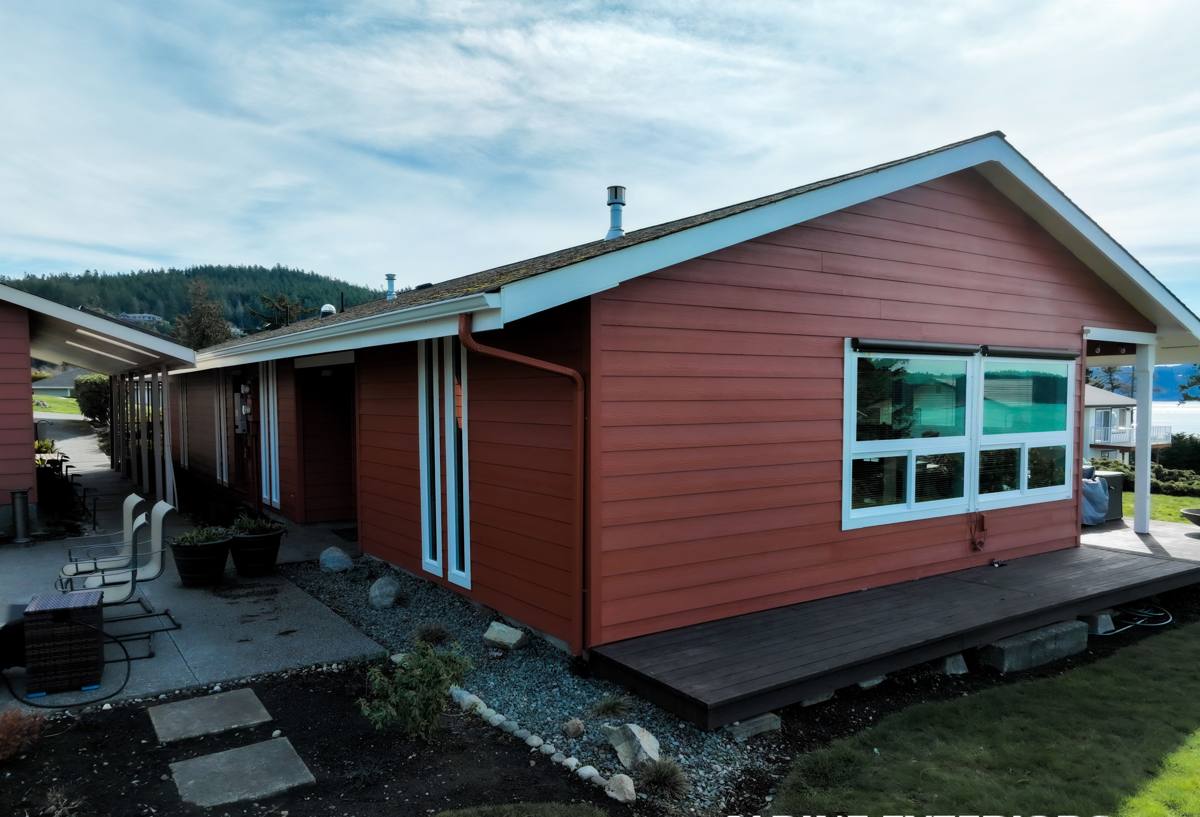
Blaine Harbor sits right at the water — Semiahmoo Bay and the Strait of Georgia on one side, the open marine air of northern Whatcom County on the other. That location is part of what makes it a great place to live, and it's also exactly why siding here fails faster than siding twenty miles inland. Three things stack on top of each other in this neighborhood: salt-laden air, wind-driven rain that comes in sideways instead of straight down, and a marine layer that keeps exterior walls damp for long stretches of the year.
That combination shortens the life of ordinary siding. Salt air is mildly corrosive to fasteners, trim, and unprotected wood fiber over time. Driving rain doesn't just wet the surface of a wall — it pushes moisture into laps, seams, and butt joints that a calm-weather installation might get away with. And the long damp season feeds moss and algae, especially on north-facing walls and any elevation shaded by trees or a neighboring structure. None of this is unique to Blaine Harbor, but the intensity of it — being this close to the water, this far north — is why a siding job that would hold up fine in a drier inland town can start showing problems here within a few years.
What a Correct Installation Has to Account For
Good siding installation in this neighborhood isn't just about the panel you choose — it's about how the whole wall assembly manages water. We build every job around a few non-negotiables specific to this kind of exposure.
Drainage plane and weather-resistive barrier
Behind the siding, there has to be a continuous weather-resistive barrier with a real drainage gap, not just a barrier stapled flat against the sheathing. In a climate that gets wind-driven rain, incidental water behind the cladding is not a hypothetical — it's expected. The wall needs a path to shed that water back out, not trap it.
Flashing at every penetration
Windows, doors, hose bibs, light fixtures, deck ledgers — every penetration is a place water can find its way in. Flashing has to be layered correctly (upper pieces overlapping lower ones, never the reverse) and integrated with the weather-resistive barrier, not just caulked over. Caulk is a backup, not a strategy.
Fastener spacing and material
Fastener spacing affects how well panels stay tight against the wall in wind, and fastener material affects how long they last in salt air. Under-fastened siding works loose over a few seasons; the wrong fastener corrodes and stains the face of the siding from the inside out.
Ground clearance and moss control
Siding installed too close to grade, mulch beds, or hardscaping stays damp longer and gives moss and algae a head start. Proper clearance, plus attention to where sprinklers and downspouts discharge, makes a real difference in how much moss you're scrubbing off north walls five years from now.
Why We Install Only James Hardie Fiber Cement Here
We don't install vinyl, LP SmartSide, primed spruce, cedar, or other fiber cement brands. On a site like Blaine Harbor, that's not a marketing position — it's a practical one. Fiber cement is cement, sand, and cellulose fiber; it doesn't absorb and swell with moisture the way engineered wood products can, and it isn't affected by the freeze-thaw and prolonged dampness cycles that come with a marine climate. It's also non-combustible, which matters on a property where wind off the water can carry embers during a regional wildfire season.
James Hardie's ColorPlus factory finish is baked on in a controlled environment rather than field-painted, and it's formulated to hold color and resist fading under UV and salt exposure better than a job-site paint job typically does. Hardie also engineers its HZ product lines by climate zone — the HZ5 formulation is built for regions that see the kind of moisture cycling Whatcom County gets, which is a meaningfully different product than what gets shipped to a dry inland market. Backed by a strong, transferable manufacturer warranty, it's the system we're comfortable standing behind on a job this exposed to the elements.
Our Installation Process for Blaine Harbor Homes
- Walk-through and moisture check. We inspect the existing siding, trim, and any visible soft spots or staining before quoting anything, so the estimate reflects the actual wall condition, not a guess.
- Tear-off and sheathing inspection. Old siding comes off and we check the sheathing underneath for rot or delamination. In a wet climate, this step catches problems that don't show up until the wall is opened up.
- Weather-resistive barrier and flashing. We install or repair the drainage plane and flash every window, door, and penetration before a single piece of siding goes up.
- Starter strip and layout. Getting the first course level and properly gapped sets the reveal lines for the entire wall.
- Panel or plank installation. James Hardie products go up to manufacturer spec — correct fastener type, spacing, and clearances, with butt joints flashed rather than just caulked.
- Caulking and touch-up. Sealant is used where Hardie's install guide calls for it — not as a substitute for flashing, but as the last line of defense.
- Final inspection. We walk the finished job looking for anything that needs adjustment before we call it complete.
Material Comparison for a Salt-Air, High-Moss Climate
| Material | Moisture Resistance | Moss/Algae Resistance | Salt Air Durability | Typical Maintenance |
|---|---|---|---|---|
| Vinyl | Sheds surface water but can warp/buckle | Moderate — surface growth still occurs | Can become brittle over time | Low, but limited repair options if damaged |
| Cedar / wood | Absorbs moisture; needs consistent sealing | Prone to growth without upkeep | Finish degrades faster near salt air | High — refinishing on a recurring cycle |
| LP SmartSide | Engineered wood; sensitive to sustained moisture at cut edges and joints | Moderate, depends on coating upkeep | Coating wears with salt/UV exposure | Moderate — edge sealing and caulk upkeep |
| James Hardie fiber cement | Does not absorb/swell; engineered HZ5 line for this climate | Resists growth better on a properly detailed wall | ColorPlus finish holds up well to UV and salt | Low — periodic rinsing, no refinishing cycle |
Signs Your Current Siding Isn't Holding Up
- Moss or dark green streaking building up on north-facing or shaded walls
- Soft or spongy spots near the bottom courses, close to grade
- Paint peeling, bubbling, or fading faster than it should for its age
- Visible gaps opening up at seams, corners, or trim boards
- Staining or discoloration running down from window heads or flashing
- Panels or boards that look warped, cupped, or pulled away from the wall
Any one of these can be a minor fix. Several at once, especially on a home that's fifteen-plus years old, usually points to a wall assembly that's been losing the fight against moisture for a while.
Why Hiring a Crew That Already Works Blaine Harbor Matters
Siding crews that work mostly inland don't always adjust their approach for a site with this much wind and salt exposure. A crew that already works Blaine Harbor and the surrounding Whatcom County waterfront knows which elevations of a house typically take the worst of the weather off the bay, where moss tends to establish first, and how much drainage detail is actually needed versus what's overkill. That local pattern recognition shows up in small decisions — extra flashing at a particular corner, tighter attention to a north wall — that a generic install spec doesn't capture. It also means familiarity with Whatcom County and City of Blaine permitting requirements, so the paperwork side of the job doesn't slow down the work side.
Cost Factors for Blaine Harbor Siding Installation
Every home is different, so we don't quote off a phone call — but the factors that move the price are consistent:
| Factor | Why It Matters |
|---|---|
| Home size and wall complexity | More square footage and more corners, gables, and trim details mean more labor |
| Tear-off vs. new construction | Removing and disposing of old siding, and repairing sheathing underneath, adds time |
| Extent of moisture damage found | Rotted sheathing or framing found during tear-off has to be repaired before new siding goes up |
| Product profile and trim package | Lap width, panel style, and trim choices within the Hardie lineup affect material cost |
| Site access | Tight lots, second stories, and waterfront setbacks can affect staging and labor time |
We provide a firm, itemized quote after walking the property — not a ballpark over the phone — so you know exactly what you're paying for before work starts.
If your Blaine Harbor home is showing moss buildup, soft spots, or siding that's simply reached the end of its life, we're happy to take a look and walk you through what we're seeing, with no pressure to commit. Reach out for a free estimate using the form below.