 Blaine Siding
 Deck Repair Built for Blaine Harbor's Climate
Blaine Harbor sits right where the Strait of Georgia and Boundary Bay meet the mainland, and that location is hard on outdoor structures. Salt-laden air moves in off the water almost daily, driving rain comes sideways during fall and winter storms, and a long, cool moss season stretches from October through April in most years. A deck built for a drier inland climate simply doesn't hold up the same way here — fasteners corrode faster, wood fibers stay damp longer between dry spells, and moss gets a foothold on any surface that doesn't drain and dry quickly. Deck repair in this neighborhood isn't just about patching what's broken; it's about understanding why Blaine Harbor decks fail differently than decks twenty miles inland, and repairing them so the same problem doesn't come back in two years.
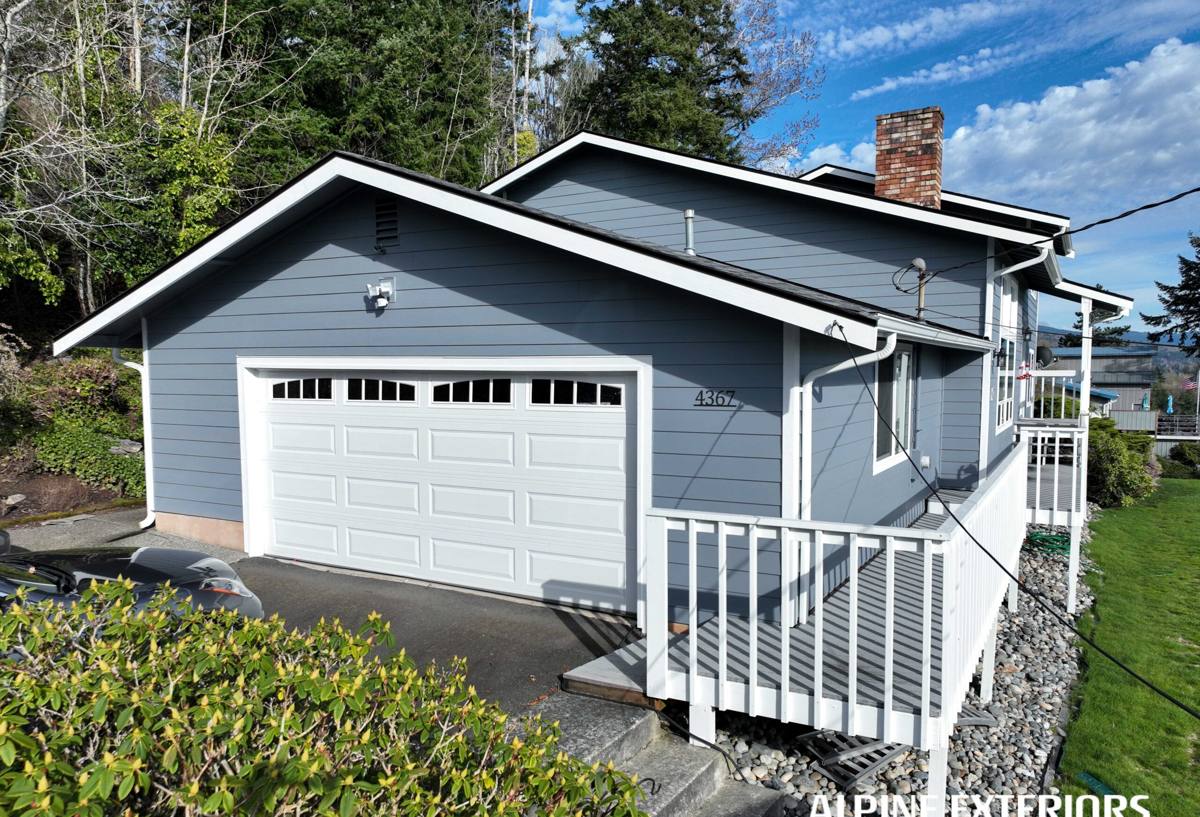
Why Decks in This Area Wear Out Faster
Salt Air and Metal Fasteners
Every deck depends on hundreds of fasteners — nails, screws, joist hangers, bolts — to hold the structure together. In a salt-air environment like Blaine Harbor, standard galvanized hardware corrodes years ahead of schedule. Once a fastener starts rusting, it loses grip strength, and the wood around it starts to soften from the moisture the corrosion traps. We see this most often at joist hangers and ledger board connections, which are structural and not something to leave for "later."
Driving Rain and Moisture Intrusion
Rain that comes straight down is manageable. Rain that comes sideways off the bay, the way it often does during a Whatcom County winter storm, finds its way into places a deck wasn't designed to shed water from — end grain on boards, the underside of ledger boards, gaps around post bases. That moisture doesn't need to pool to cause damage; it just needs time and repeated exposure, which this climate provides in abundance.
Moss, Algae, and Surface Decay
The long moss season here means any deck surface that stays shaded or slow-draining will grow something on it. Beyond being slippery and unattractive, moss and algae hold moisture against the wood surface long after the rest of the yard has dried out, which accelerates surface rot and finish failure. Decks with poor airflow underneath — low clearance, dense landscaping pressed up against the skirting — are the ones we see moss problems on repeatedly.
Signs Your Blaine Harbor Deck Needs Repair, Not Just Cleaning
- Soft or spongy spots when you walk across the deck boards
- Rust streaks running down from screw heads or metal connectors
- Gaps opening up between the ledger board and the house wall
- Railing posts that wiggle or flex when pushed
- Persistent green or black staining that comes back within weeks of cleaning
- Stairs that feel less solid than they used to, especially near the base
- Visible daylight or water staining under the deck near joists and beams
- A musty smell coming from underneath the structure
Any one of these on its own might be minor. Several together usually mean moisture has been working on the structure for a while, and a cosmetic cleaning or re-stain won't address the underlying cause.
What a Correct Deck Repair Actually Involves
A lot of "deck repair" in this trade amounts to swapping a few boards and calling it done. That works for cosmetic damage, but it doesn't work when the underlying cause is moisture or corrosion, because the replacement boards fail the same way on the same timeline. Our approach starts with figuring out why a section failed before we decide how to fix it.
Structural Inspection First
Before any boards come off, we check the ledger board connection, the posts and footings, and the joists underneath — these are the parts that hold everything up, and they're also the parts most likely to be quietly failing while the surface still looks fine. Ledger board separation from the house is one of the more serious issues we look for, since it's a safety concern, not a cosmetic one.
Matching Repairs to the Damage
Isolated rot or a cracked board gets cut back to sound wood and replaced in kind. Corroded fasteners get pulled and replaced with hardware rated for coastal exposure, not standard interior-grade galvanized. Where we find moisture trapped by poor drainage or airflow, we address that condition as part of the repair — otherwise we're just replacing the same failure point on a delay.
Finishing the Right Way for This Climate
Any exposed or replaced wood gets properly sealed before it's put back into service. In a marine, high-moisture environment, the gap between "sealed" and "not yet sealed" is where a lot of avoidable damage happens, so we don't leave repaired sections exposed to the weather any longer than necessary.
Common Blaine Harbor Deck Repairs, Compared
| Repair Type | Typical Cause Locally | What's Involved | Rough Cost Range |
|---|---|---|---|
| Board replacement | Localized rot, cracking, moss-related surface decay | Remove and replace affected boards, seal cut edges | Low |
| Fastener/hardware replacement | Salt-air corrosion of screws, nails, joist hangers | Remove corroded hardware, replace with coastal-rated fasteners | Low to moderate |
| Ledger board repair | Moisture intrusion at house connection | Inspect flashing, reseal or rebuild connection to code | Moderate |
| Railing and post repair | Loosened connections, rot at post base | Reset or replace posts, rebuild railing sections | Moderate |
| Substructure repair | Joist or beam rot from long-term moisture exposure | Sister or replace framing members, improve drainage/airflow | Higher |
These ranges are broad on purpose — the right number depends on how much of the deck is affected and whether the damage is surface-level or structural. We give an honest number after we've actually looked at the deck, not before.
How Our Process Works
- Walkthrough and assessment. We inspect the surface, the substructure, and the connection points, and tell you plainly what we find — including if the deck is in better shape than it looks.
- Written scope and estimate. You get a clear breakdown of what needs repair now, what's worth watching, and what it costs, with no pressure to upsell a full rebuild if repair is the honest answer.
- Repair work. We replace only what needs replacing, match materials and fastener grade to the coastal environment, and keep the work area protected from weather while it's open.
- Sealing and finish. All new or exposed wood is sealed before we consider the job finished — not left for a future weekend project.
- Final walkthrough. We check the repair with you and flag any maintenance items, like drainage or landscaping changes, that will extend the life of the fix.
Repair or Replace? An Honest Look
Not every damaged deck needs a full rebuild, and not every deck is worth repairing indefinitely. The deciding factor is almost always the substructure — the framing, ledger board, and footings. If those are sound and the damage is limited to surface boards, hardware, or railings, repair is usually the right call and the more economical one. If the framing itself has significant rot, especially near the ledger board or main support beams, patch repairs become a cycle of chasing the same problem, and replacement starts to make more sense. We'll tell you honestly which category your deck falls into rather than defaulting to the bigger job.
What Extends a Repair's Lifespan in This Climate
- Coastal-rated or stainless fasteners instead of standard galvanized hardware
- Adequate clearance and airflow underneath the deck to let it dry between rain events
- Keeping moss and organic debris cleared from board gaps and the substructure
- Re-sealing exposed wood on a regular schedule rather than waiting for visible failure
- Checking the ledger board connection annually, since it's hidden but structurally critical
Why It Matters to Hire a Crew That Already Works This Neighborhood
Blaine Harbor's mix of salt exposure, driving winter rain, and a long moss season isn't identical to conditions a few miles inland, and it's not the same as what a crew working mostly in drier parts of Whatcom County deals with day to day. A contractor who repairs decks here regularly knows which fastener grades actually hold up near the water, which board species tolerate the moisture cycle better, and where moss and drainage problems tend to originate on local lots. That local pattern recognition is the difference between a repair that lasts and one that reopens the same failure in a year or two. We work on homes throughout Blaine and the surrounding Whatcom County coastline, and the repairs we do here reflect what actually holds up in this specific environment — not a generic approach borrowed from a different climate.
Get a Straightforward Estimate
If your deck in Blaine Harbor is showing soft spots, rust streaks, loose railings, or moss that keeps coming back, it's worth a look before those issues reach the framing underneath. We offer free, no-pressure estimates — we'll tell you what we find, what it will take to fix it correctly for this climate, and what it costs, with no obligation to move forward. Use the form below to get started.