 Blaine Siding
 Building a Deck That Can Handle Blaine Harbor's Marine Climate
A deck in Blaine Harbor lives a harder life than a deck fifty miles inland. The combination of salt-laden air off the water, near-constant winter rain, and a moss season that can stretch from October into May puts real stress on every part of the structure — not just the boards you walk on, but the framing, fasteners, and footings underneath. Homes here in Whatcom County, especially those close to the water, need a deck that's built with that reality in mind from the design stage, not patched up after the fact. This page covers what that actually looks like: the materials, the details, and the process we use specifically for Blaine Harbor properties.
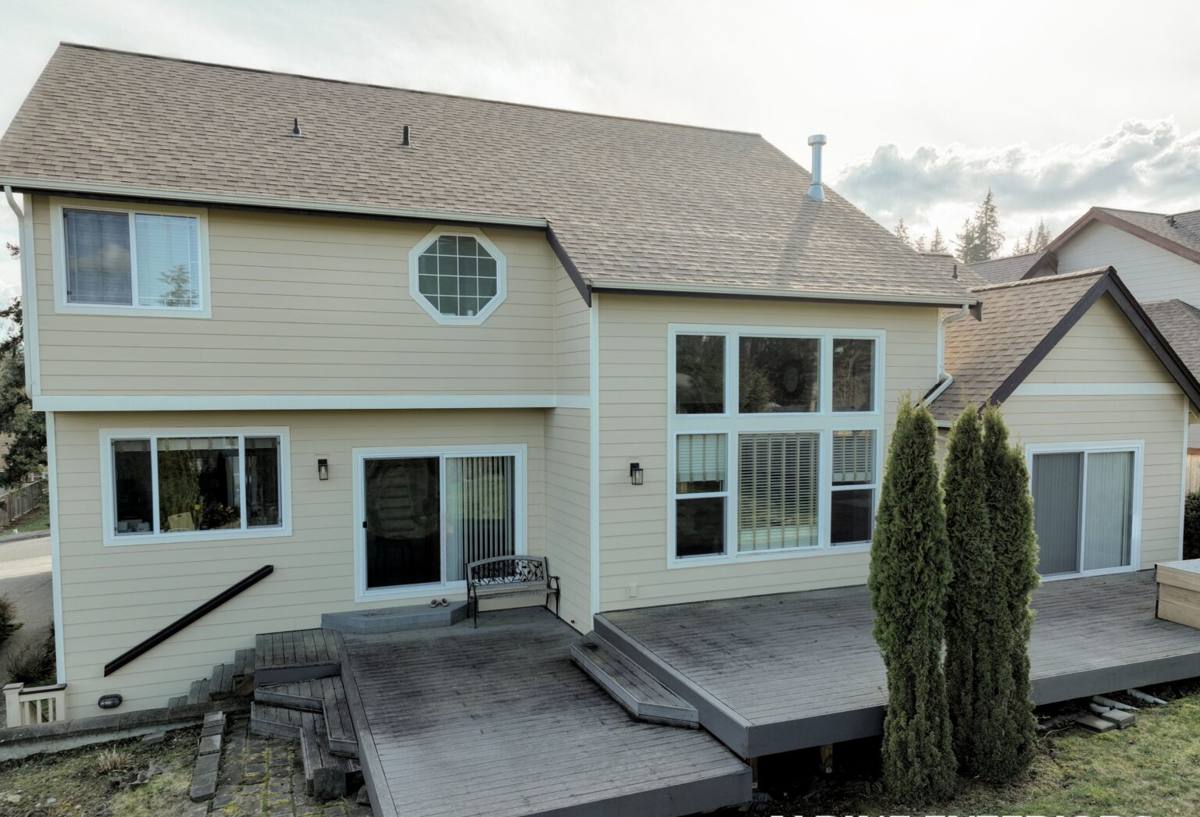
What Salt Air, Rain, and Moss Actually Do to a Deck
It helps to understand the specific ways a marine climate wears down a deck, because it changes what "good work" means out here compared to a drier part of the state.
Corrosion You Can't See From the Top
Salt air accelerates corrosion on any exposed metal — screws, joist hangers, post bases, bolts. A fastener that would last decades in a dry inland yard can start rusting and staining within a few seasons this close to the water. Once corrosion starts on a structural connector, it's not a cosmetic problem; it's a slow loss of holding strength in exactly the parts of the deck you're trusting to keep it standing.
Wood That Never Fully Dries Out
Blaine's wet season is long, and driving rain off the water doesn't just fall straight down — it gets pushed sideways into ledger boards, railing posts, and any horizontal surface that isn't sloped to shed water. Wood that stays damp for extended stretches is what invites rot, and it's also exactly the environment moss and algae need to establish themselves on decking, stair treads, and railings.
Choosing a Decking Material That Fits This Climate
There's no single "best" decking material for every home — it depends on budget, maintenance appetite, and how exposed the deck is to wind-driven rain. Here's how the common options actually perform in a Blaine Harbor setting.
| Material | How It Handles Salt Air & Moisture | Moss/Algae Resistance | Maintenance Needed |
|---|---|---|---|
| Pressure-treated lumber | Good if properly sealed and re-coated; framing-grade treatment resists rot but hardware still corrodes at normal rates | Low — needs regular cleaning and treatment | Annual cleaning, periodic sealing/staining |
| Cedar | Naturally rot-resistant but softer and can weather quickly in constant damp; needs finish maintained | Moderate — still needs cleaning in shaded, wet areas | Regular cleaning, refinishing every few years |
| Capped composite | Excellent — the cap layer resists moisture absorption and doesn't corrode or rot | Higher — smoother, sealed surface sheds moss more easily but still needs washing | Occasional washing, no staining or sealing |
| PVC decking | Excellent — fully synthetic, unaffected by salt or moisture absorption | Higher — non-porous surface resists staining and growth | Occasional washing only |
We'll walk through this with you honestly, including the real cost difference between materials, rather than pushing whatever has the best margin. Some homeowners are fine with the upkeep wood requires in exchange for the lower upfront cost; others would rather pay more once and do less maintenance for the next couple of decades. Both are reasonable choices — the wrong choice is picking a material without understanding the tradeoff going in.
Framing and Flashing: The Part of the Deck Nobody Sees
Most deck failures don't start with the decking boards — they start underneath, where moisture gets trapped against wood that can't dry out. This is where a lot of the difference between a deck that lasts and one that needs early repairs actually gets decided.
Ledger Board Attachment
The ledger board — where the deck attaches to the house — is the single most common source of hidden water damage on any deck, and it's a bigger issue here given how much horizontal rain the siding takes. Proper flashing that directs water away from the house band joist, rather than trapping it against the wall, is non-negotiable. We flash this connection correctly every time, not just where it's visible.
Joist Protection
Framing lumber that sits under decking is exposed to whatever drips through the gaps between boards for the life of the deck. Joist tape or an equivalent barrier over the top edge of each joist keeps fasteners from sitting in standing water and slows the moisture absorption that eventually leads to soft, rotting framing — a slow problem that's expensive to fix once it's advanced, and easy to prevent at build time.
Hardware and Fasteners: Small Parts, Big Consequences
Given how much corrosion accelerates in salt air, hardware selection matters more here than almost anywhere else in the state. We use stainless steel or marine-grade coated fasteners and structural connectors rated for corrosive environments, not standard galvanized hardware that's fine sixty miles from the coast but starts failing early this close to the water. The same goes for post bases, joist hangers, and any structural bracket — these carry real load, and a corroded connector is a structural problem, not just an eyesore.
Designing for Drainage, Airflow, and Moss Control
A deck that's designed to shed water and keep air moving underneath will fight moss and rot on its own, year after year, with far less work from you.
Deck Board Spacing and Slope
Correct board spacing lets water drain through rather than pool on the surface, and a slight slope away from the house keeps water moving instead of sitting. Boards installed too tight, or a deck framed dead level, both invite the standing moisture that moss loves.
Keeping Air Moving Underneath
Skirting and enclosed areas under a deck look clean but can trap humid air against the framing if they're not vented properly. We build in ventilation so the underside of the deck can actually dry between rain events, instead of staying damp through the entire wet season.
Our Deck Building Process
The process is straightforward, but we don't skip steps to save time — especially the ones that don't show once the decking is down.
- On-site assessment of the location, sun/wind/rain exposure, and how the deck ties into the house
- Design and material discussion, including honest tradeoffs between wood and composite/PVC options
- Permitting through the appropriate local jurisdiction before any work begins
- Footings and structural framing, built to span and load requirements for the design
- Ledger flashing, joist protection, and corrosion-resistant hardware throughout
- Decking, railing, and stair installation with proper spacing and drainage slope
- Final walkthrough covering how the specific material you chose should be cared for
Keeping a Blaine Harbor Deck in Good Shape
Good construction gets you most of the way there, but a little routine attention keeps a deck performing for the long run in this climate. Here's what we recommend to homeowners in the area:
- Sweep debris out of board gaps regularly so water and organic matter don't build up and hold moisture against the wood
- Wash the deck surface at least once or twice a year to remove the algae and moss film that forms during the wet season
- Check railing posts and stair connections annually for movement, which can signal a corroding fastener underneath
- Keep gutters and downspouts near the deck clear so runoff isn't dumping extra water onto or under the structure
- Re-seal or re-stain wood decking on the schedule recommended for the specific product you have, not just when it looks faded
- Trim back overhanging vegetation that keeps sections of the deck shaded and damp longer than the rest
Why Hire a Crew That Already Works in Blaine Harbor
A contractor who mostly builds decks in drier parts of Whatcom County can still build a structurally sound deck — but they may not default to marine-grade hardware, proper ledger flashing for wind-driven rain, or the drainage details that matter most this close to the water, because those details aren't as critical where they usually work. We build in this specific environment regularly, so those choices aren't an upsell or an afterthought — they're just how we build a deck in Blaine Harbor. That local familiarity also extends to knowing what the permitting process looks like for waterfront and near-waterfront properties in the area, which can add steps a purely inland project wouldn't have.
When you're vetting any contractor for a project like this, it's worth asking directly how they handle hardware selection, ledger flashing, and drainage for homes exposed to salt air — the answer will tell you quickly whether they've actually built in this kind of environment before.
If you're planning a new deck or replacing one that's showing its age, we're happy to take a look and talk through what makes sense for your home and budget. Use the form below to request a free, no-pressure estimate.