 Blaine Siding
 Building a Deck That Actually Belongs in Blaine Harbor
Blaine Harbor sits close enough to the water that every deck built here is doing more work than a deck built twenty miles inland. Salt-laden air moves off the harbor and settles into wood grain, metal fasteners, and finish coatings. Driving rain off Semiahmoo Bay hits decks sideways, not just from above, which changes how water actually moves through a structure. And Whatcom County's long wet season means a deck here spends a good chunk of the year damp, shaded, and growing moss whether anyone wants it to or not. A deck design that works fine in a dry inland yard can start failing within a few seasons out here — not because the homeowner did anything wrong, but because it was never built for this environment in the first place.
This page is about one thing: what it takes to build a custom deck in Blaine Harbor that holds up to salt air, sideways rain, and moss, and how we approach that job differently than we would somewhere drier and further from the water.
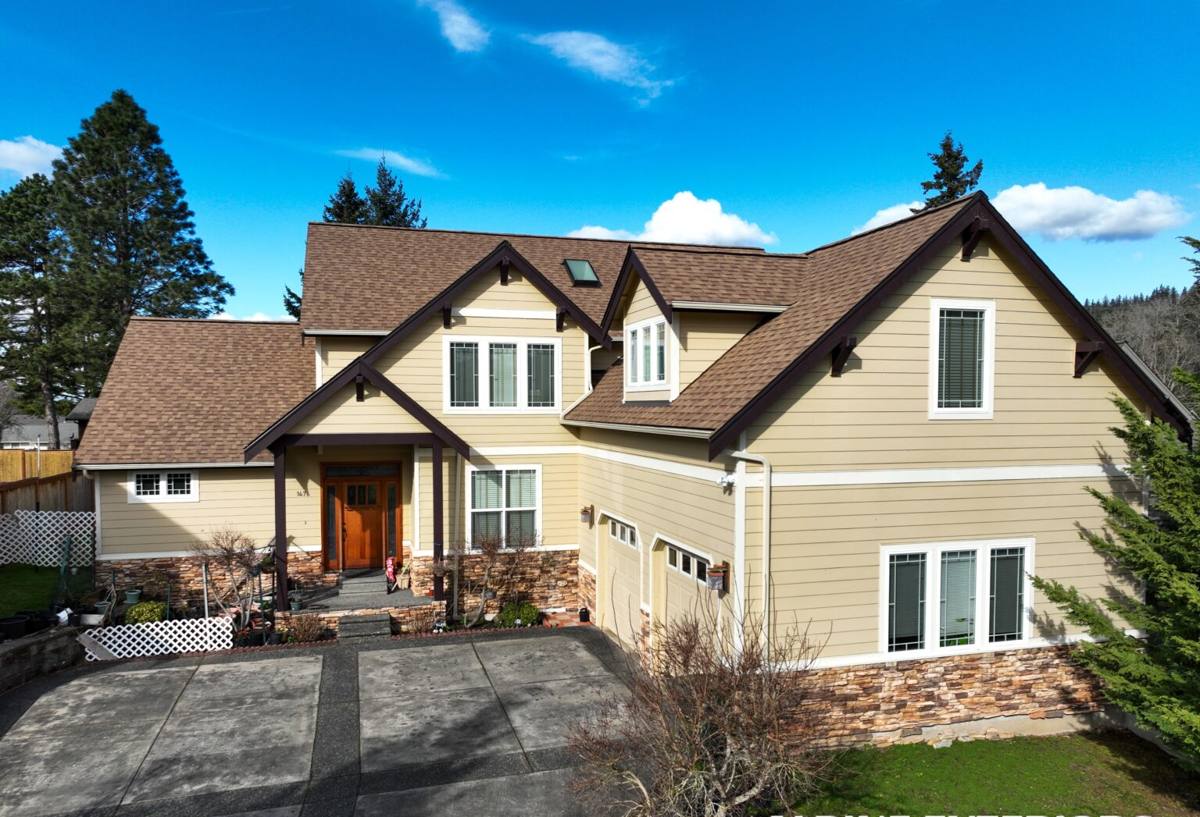
What Blaine Harbor's Climate Actually Does to a Deck
It helps to be specific about the mechanisms, because vague warnings about "harsh weather" don't tell you anything useful.
Salt Air
Airborne salt is corrosive to exposed metal — screws, joist hangers, bolts, and railing hardware all take a hit over time if they aren't rated for it. Salt also draws moisture into porous materials, which keeps untreated or under-treated wood damp longer than it would be a few miles inland. The result isn't sudden failure; it's accelerated fastener corrosion and wood that never fully dries out between rain events.
Driving Rain
Wind off the water pushes rain at an angle instead of straight down, which means it gets up under railings, into ledger board connections, and behind fascia in ways a calm-weather rain doesn't. Any gap in flashing or any joint that wasn't sealed with this kind of exposure in mind becomes a point where water gets in and stays in.
The Long Moss Season
Moss needs shade, moisture, and time — Blaine Harbor decks, especially ones under tree cover or on the north or west side of a house, offer all three for a good part of the year. Moss on decking isn't just cosmetic. It holds moisture against the board surface, and on wood decking it becomes a slip hazard almost as fast as it becomes an eyesore.
Choosing Decking Material for a Harbor-Adjacent Home
There isn't one "correct" decking material for Blaine Harbor — there's a right material for a given budget, maintenance appetite, and how exposed the deck is to salt air and standing moisture. Here's how the common options actually compare in this specific environment, not in a generic climate.
| Material | How it handles salt air & rain | Moss/algae behavior | Upfront cost | Ongoing maintenance |
|---|---|---|---|---|
| Pressure-treated wood | Needs consistent sealing; fasteners must be corrosion-rated | Prone to moss/algae growth if not cleaned and resealed regularly | Low | Annual cleaning and periodic resealing |
| Cedar | Naturally rot-resistant but still needs finish maintenance near salt air | Still susceptible to moss in shaded, damp spots | Medium | Regular finish upkeep to prevent graying and moisture uptake |
| Traditional composite | Handles moisture well; check manufacturer specs on coastal/salt exposure | Surface texture can hold organic growth if not cleaned | Medium-High | Low — periodic washing |
| Capped composite / PVC | Best resistance to moisture intrusion and salt exposure of the common options | Smoother cap layer sheds moss/algae more easily | High | Lowest — occasional washing |
For a lot of Blaine Harbor homeowners, the honest trade-off comes down to this: wood costs less to install but asks for more attention every single year to actually hold up out here, while composite and capped composite cost more upfront but ask a lot less of you once it's built. Neither is "wrong" — it depends on whether you'd rather spend money now or spend time later.
Framing and Fasteners: Where Harbor Decks Actually Fail First
Most deck problems we get called out to fix in coastal Whatcom County aren't decking-surface problems — they're substructure problems that started years before anyone noticed. The parts you don't see are the parts salt air and driving rain attack first.
- Fastener selection: Standard galvanized screws and hangers corrode faster in salt air. Stainless steel or high-grade coated hardware rated for coastal/marine exposure costs more but is the difference between hardware that lasts and hardware that rusts and weakens within a handful of years.
- Ledger board flashing: Where the deck attaches to the house is the single most common point of hidden water intrusion. Proper flashing — installed correctly, not just present — keeps driving rain from working its way behind the ledger and into the house framing.
- Joist protection: Joist tape or an equivalent moisture barrier over the top of each joist keeps water from soaking into end grain and fastener holes, which is where rot typically starts on a wood-framed deck.
- Post base connections: Posts set directly into wet soil or concrete without a proper standoff base wick moisture up into the post. In a climate this wet for this long, that's not a minor detail.
None of this is visible once the deck is finished, which is exactly why it matters so much who builds it and how carefully they handle the parts that get covered up.
Drainage, Slope, and Moss: Designing the Water Out
You can't fully stop rain from landing on a deck, but you can control what happens to it after it lands. A deck surface should have a slight slope away from the house so water sheds instead of pooling. Gaps between boards need to be consistent enough to let water drain through rather than sit on the surface — too tight and water sits, too wide and it looks and feels wrong underfoot.
For the moss problem specifically, design choices matter as much as material choice. Decks tucked under heavy tree cover or on a shaded north-facing side of the house are always going to see more moss pressure than a deck in open sun — that's just Blaine Harbor geography. Where shade can't be avoided, we lean toward decking materials that don't give moss much to grip onto, and we make sure the framing underneath is ventilated enough that the whole structure can actually dry out between rain events instead of staying damp indefinitely.
Our Process for a Blaine Harbor Custom Deck
We build custom decks the same disciplined way whether it's a small platform off a kitchen door or a full multi-level deck, but a Blaine Harbor project gets a few extra steps built in specifically because of where it sits.
- On-site assessment: We look at sun/shade exposure, prevailing wind and rain direction off the harbor, existing moss or moisture issues on the property, and how the deck will tie into the house.
- Material and layout conversation: We walk through the honest trade-offs — wood versus composite, open versus covered, upfront cost versus long-term upkeep — based on your budget and how much maintenance you actually want to do.
- Design and permitting: We put together a plan sized and engineered for the site, and handle the permitting process with the City of Blaine or Whatcom County as required for the scope of work.
- Framing built for the environment: Corrosion-rated fasteners, proper ledger flashing, joist protection, and standoff post bases go in as standard practice here — not as an upsell.
- Decking installation: Consistent board spacing, correct drainage slope, and attention to how the finished surface will actually shed water and resist moss.
- Final walkthrough: We go over basic care specific to your material choice so you know what upkeep, if any, is expected going forward.
Permits and Local Requirements
Most custom deck projects in Blaine require a building permit, particularly once a deck exceeds a certain height off grade or is attached to the house structurally. Requirements can also touch on setbacks from property lines, guardrail height and spacing if the deck is elevated, and stair specifications. Because these details vary by property and by project scope, we handle the permit process as part of the build rather than leaving it to the homeowner to sort out — it's a standard part of doing this correctly, not an extra service.
Maintenance Checklist for a Salt-Air Deck
Whatever material you choose, a little seasonal attention goes a long way in this climate. Here's what we recommend to Blaine Harbor homeowners regardless of which decking material they picked:
- Sweep debris off the deck regularly, especially in fall — trapped leaves hold moisture against the surface and feed moss growth.
- Rinse salt residue off the surface and railings periodically, particularly after storms with onshore wind.
- Check fastener heads and hardware yearly for early signs of corrosion or loosening.
- Clean moss or algae as soon as it appears rather than letting it establish — it's far easier to remove early.
- Inspect the ledger board flashing and any visible framing connections once a year for signs of water staining.
- Reseal wood decking on the manufacturer's recommended schedule — skipping a cycle in this climate shows up fast.
- Keep gutters and downspouts near the deck clear so roof runoff isn't dumping extra water onto or near the structure.
Why Local Experience in Blaine Harbor Matters
A lot of what makes a deck last out here isn't exotic — it's knowing, before the first post hole is dug, which side of the house is going to fight moss for nine months of the year, which fasteners are worth the extra cost given the salt air, and how the permitting process actually works with the local building department. A crew that mostly works inland can build you a technically sound deck and still get these regional details wrong, because they're used to a different set of conditions. We build decks in Blaine and along the Whatcom County coastline regularly, and the way we frame, flash, and finish a deck here reflects what we've seen actually hold up — and what doesn't — in this specific environment.
If you're planning a new deck or replacing one that's struggled with moss, rot, or corroded hardware, we're happy to take a look and talk through what makes sense for your property. Reach out for a free, no-pressure estimate using the form below.