 Blaine Siding
 Why Bellingham Roofs Wear Differently Than Roofs Inland
A roof in Bellingham does more work than a roof thirty miles inland. Whatcom County sits right up against the Salish Sea, and that proximity to salt water changes how a roof ages. Salt-laden air corrodes exposed metal fasteners and flashing faster than dry inland air does. Wind-driven rain off the water pushes moisture sideways into laps and seams that a roof in a calmer climate would never have to defend against. And the long, damp shoulder seasons here give moss and algae months at a time to take hold on north-facing slopes and shaded valleys.
None of that means a Bellingham roof needs to be exotic. It means the details — underlayment choice, fastener material, ventilation, and flashing work — have to be done correctly for this specific climate, not just to a generic code minimum. That's the difference between a roof that looks fine for five years and one that actually performs for its full rated life here.
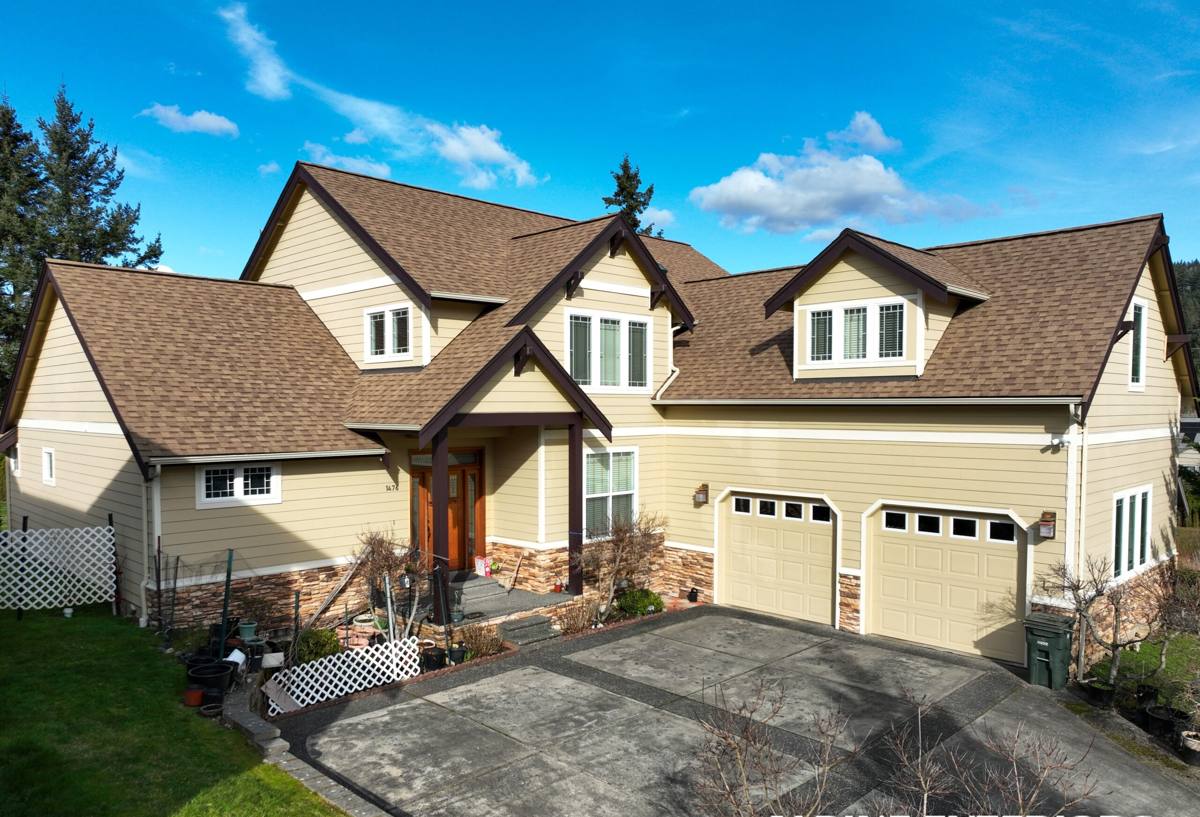
Signs a Bellingham Roof Needs Replacement, Not Just Repair
Not every roof problem calls for a full replacement, and a straight contractor will tell you when a repair is the honest answer. But there's a point where patching stops making financial sense. Watch for:
- Granule loss heavy enough that you can see bare, shiny patches on asphalt shingles, especially on south and west-facing slopes.
- Persistent moss growth that keeps returning within a season or two of cleaning, particularly on shaded or north-facing roof planes.
- Curling, cupping, or cracked shingles across large sections rather than one isolated spot.
- Soft spots or sagging when walked on, which usually points to deck damage underneath.
- Daylight visible through the roof deck from the attic, or stains on attic sheathing after a hard rain.
- A roof approaching or past 20-25 years old (asphalt) with multiple areas showing wear at once.
If a roof is showing two or three of these at once, spot repairs tend to become a cycle of chasing new leaks every wet season rather than solving the underlying problem.
What a Correct Roof Replacement Involves Here
Full tear-off and deck inspection
We don't recommend layering new shingles over old ones, even though it's cheaper up front. A tear-off is the only way to actually see the roof deck and catch soft or rotted sheathing before it's buried under a new roof system for another 20+ years. In a climate with as much moisture exposure as Bellingham gets, hidden deck rot is one of the most common surprises we find once the old roofing comes off.
Underlayment built for wind-driven rain
Standard felt underlayment is not our default choice for homes exposed to the wind off the water. We use synthetic underlayment with self-adhering ice-and-water membrane at eaves, valleys, and any low-slope transitions — the places where wind-driven rain is most likely to be pushed backward under the shingles instead of running off them.
Ventilation that actually balances
A roof system needs intake at the eaves and exhaust at the ridge working together, in roughly equal proportion. Get this wrong and moisture from inside the house condenses in the attic, which accelerates deck rot and shortens the life of the new roof regardless of what's on top of it. We check and correct ventilation as part of every replacement, not as an upsell afterward.
Flashing details, done in metal, done right
Chimneys, skylights, sidewalls, and valleys fail more often at the flashing than in the field of the roof itself. We use corrosion-resistant metal flashing and step-flash sidewalls properly rather than relying on caulk or roof cement to bridge a gap — caulk is a maintenance item, not a waterproofing detail, and it's the first thing that fails under repeated wet-dry cycling near salt air.
Choosing Roofing Materials for Whatcom County Weather
There's no single "best" roofing material for every home — it depends on budget, roof pitch, and how much long-term maintenance an owner wants to take on. Here's how the common options actually compare for a coastal Whatcom County property:
| Material | Moss & algae resistance | Wind-driven rain performance | Typical lifespan here | Maintenance |
|---|---|---|---|---|
| Architectural asphalt shingle | Moderate; algae-resistant granules help but don't eliminate moss | Good with proper underlayment and flashing | 20-25 years | Periodic moss removal, especially north slopes |
| Standing seam metal | High; sheds moisture, little for moss to grip | Excellent; fewer seams for wind to exploit | 40-50+ years | Low; occasional fastener/sealant check |
| Synthetic/composite shingle | Good to high, product-dependent | Good | 30-40 years | Low to moderate |
Asphalt remains the most common and most budget-friendly choice, and a correctly installed architectural shingle roof holds up well here. Metal costs more up front but asks the least of an owner over time, which matters on a roof exposed to this much salt air and rain. We'll walk through the honest trade-offs for a specific home rather than push one product across the board.
Moss, Algae, and Salt Air: What Ongoing Care Actually Looks Like
Even a well-installed roof in Bellingham benefits from some seasonal attention. This isn't about scrubbing shingles raw — that does more damage than good. It's about staying ahead of the conditions that cause problems:
- Keep gutters clear of needles and debris so water isn't backing up under the shingle edge during heavy rain.
- Trim back overhanging branches that keep north-facing slopes shaded and damp longer than the rest of the roof.
- Have moss treated with a proper roof-safe treatment rather than pressure-washed off, which strips granules and shortens shingle life.
- Check exposed metal flashing and fasteners periodically for early corrosion, particularly closer to the water.
A roof installed with the right underlayment, ventilation, and flashing will handle Bellingham's climate with far less of this upkeep — but "low maintenance" isn't the same as "no maintenance" anywhere on the coast.
Our Roof Replacement Process
- On-site inspection and estimate. We walk the roof, check the attic when accessible, and give a written scope and price — no pressure, no surprise add-ons sprung mid-job.
- Material selection. We go over the honest trade-offs between shingle, metal, and composite options for the specific roof pitch and budget.
- Scheduling around the weather. We plan tear-off days around forecasted dry windows and keep the deck protected if conditions turn.
- Tear-off and deck inspection. Old roofing comes off, the deck gets inspected, and any soft or damaged sheathing is repaired before anything new goes down.
- Underlayment, ventilation, and flashing installation. The parts that actually determine how the roof performs in wind and rain.
- Roofing material installation. Installed to manufacturer spec, not shortcuts, so the warranty is actually valid if it's ever needed.
- Final walkthrough and cleanup. Magnetic sweep for nails, hauled-away debris, and a walkthrough so the homeowner knows exactly what was done.
Roof Replacement Cost Factors in Bellingham
Every roof is different, so we won't quote a number without seeing it — but these are the factors that actually move the price:
| Factor | Why it matters |
|---|---|
| Roof size and number of planes | More square footage and more valleys/hips mean more material and labor time |
| Roof pitch and accessibility | Steep or hard-to-access roofs require more safety setup and slow the work down |
| Deck condition | Rotted sheathing found during tear-off needs to be replaced before new roofing goes on |
| Material choice | Asphalt, composite, and metal carry different material and labor costs |
| Number of penetrations | Chimneys, skylights, and vents each need proper flashing, which adds labor |
| Layers to remove | Tearing off multiple existing layers takes longer than a single-layer tear-off |
As a rough range, most Bellingham-area asphalt shingle replacements land in the mid-to-upper five figures depending on size and complexity, with metal running higher up front. A firm number only comes from actually seeing the roof.
Why Hire a Crew That Already Works in Bellingham
A roofing crew that regularly works this part of Whatcom County already knows which underlayment specs and flashing details hold up against the wind off the water, which neighborhoods deal with heavier moss because of tree cover, and how to schedule tear-offs around a wet forecast without leaving a deck exposed. That local pattern recognition is hard to replicate for a crew that only sees the Pacific Northwest coastal climate occasionally. We work throughout the Blaine and Bellingham area and build every replacement around what actually holds up here — not a generic install written for a drier climate.
If your roof is showing wear, or you just want an honest read on whether repair or replacement makes more sense, we're happy to take a look. Use the form below to request a free, no-pressure estimate.