 Blaine Siding
 Roofing Point Roberts: A Job That Needs Local Knowledge
Point Roberts sits in its own world — a small peninsula hanging off Whatcom County, cut off from the rest of Washington by land and only reachable by crossing into Canada and back. That isolation matters for a roofing job. Materials, crews, and dump runs all have to be planned around a border crossing, not just a drive across town. A crew that already works this pocket of the county knows how to schedule around that, order enough material the first time, and avoid the delays that come from treating Point Roberts like just another stop on the route.
The roof itself faces conditions that are a step harder than most inland Whatcom County homes deal with. Point Roberts is surrounded on three sides by the Salish Sea, which means salt-laden air moving across every roof surface almost year-round, wind-driven rain that gets under poorly sealed edges, and a shaded, moisture-heavy climate that grows moss on anything that isn't shedding water fast. A new roof here isn't just about covering the house — it's about choosing materials and details that hold up to that specific combination.
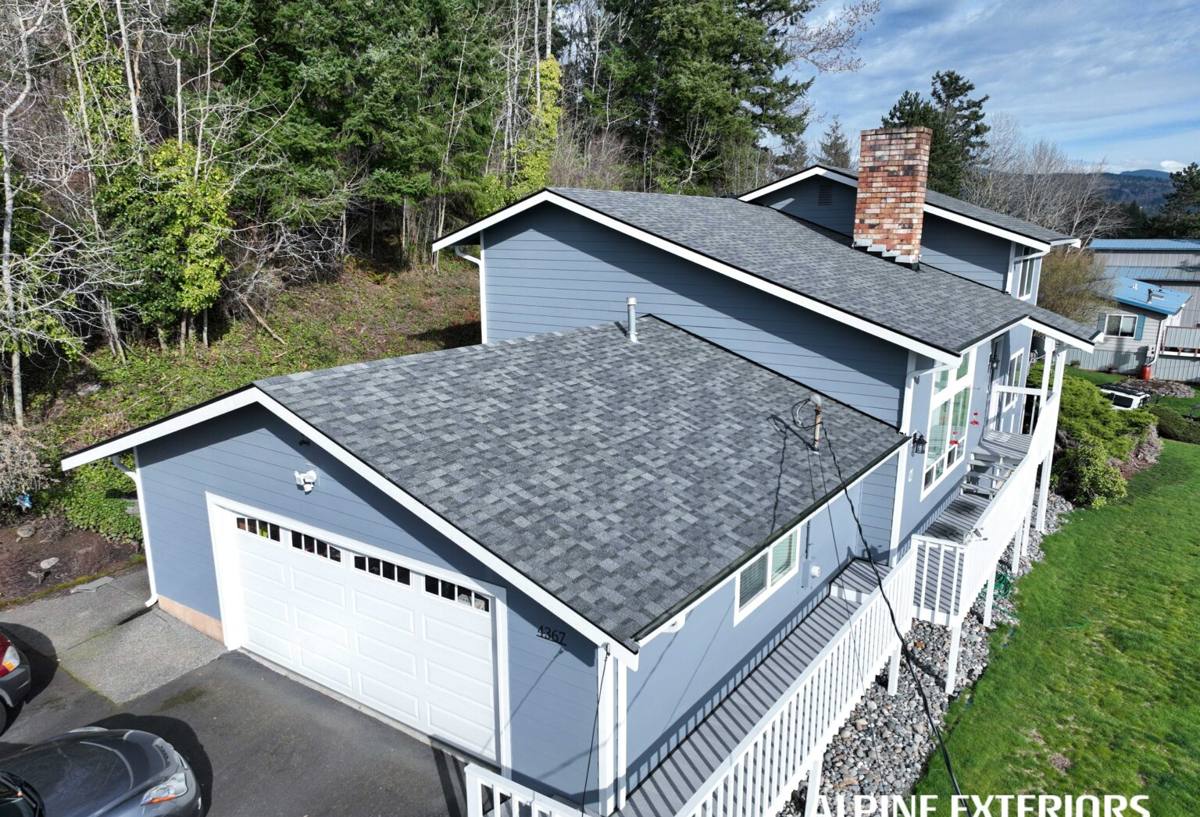
What the Point Roberts Climate Actually Does to a Roof
Salt Air
Salt air accelerates corrosion on exposed metal — flashing, fasteners, vents, gutters — faster than it would a few miles inland. Standard galvanized fasteners and thin flashing can start showing rust streaks and pitting years before they would on a home in Everson or Lynden. It doesn't ruin a roof overnight, but it shortens the life of any component that isn't rated for coastal exposure.
Driving Rain
Point Roberts catches wind off open water with little to block it. That wind doesn't just drop rain straight down — it pushes it sideways and up under shingle edges, around vent boots, and into any flashing detail that's cut corners. A roof that would pass fine in a sheltered inland yard can leak here if the underlayment, flashing laps, and edge details aren't built for wind-driven water.
Long Moss Season
Between the marine humidity and tree cover common on the peninsula, moss has a long growing window — often close to year-round on north-facing or shaded slopes. Moss holds moisture against the roof surface, works into shingle laps, and lifts tabs over time. Left unmanaged, it shortens the life of any roofing material, asphalt or wood, faster than sun exposure alone ever would.
What a Correct New Roof Installation Looks Like Here
A roof built for Point Roberts isn't a different product line — it's the same core materials installed with extra attention paid to the details that matter most in this climate.
- Corrosion-resistant metal: stainless or coated fasteners and flashing at valleys, chimneys, and penetrations instead of standard galvanized, especially anywhere close to the water side of a property.
- Full synthetic underlayment: a continuous water-resistant layer under the roof covering, not just felt paper, so wind-driven rain that gets past the surface layer still has a second line of defense.
- Sealed, lapped flashing at every penetration: vents, skylights, chimneys, and wall-to-roof transitions built and lapped in the correct order so wind can't drive water backward under a joint.
- Ice-and-water shield at eaves and valleys: the areas most prone to wind-driven rain and moisture pooling get a self-adhering membrane, not just standard felt.
- Zinc or copper strips near the ridge on shaded roofs: a low-maintenance way to slow moss regrowth on the sections of the roof that stay damp longest.
- Proper attic ventilation: balanced intake and exhaust venting keeps moisture from condensing under the roof deck, which matters more in a consistently humid coastal microclimate.
Choosing a Roofing Material for a Point Roberts Home
Most homes on the peninsula land on one of a few roofing options. There's no single "best" choice — it comes down to how the roof is shaped, how much shade it gets, and what the homeowner wants to maintain over the years.
| Material | How It Handles Salt Air & Rain | Moss Behavior | Typical Lifespan |
|---|---|---|---|
| Architectural asphalt shingle | Good, when paired with corrosion-resistant flashing and fasteners | Moderate risk on shaded slopes without zinc strips; manageable with regular upkeep | 25-30 years |
| Standing seam metal | Excellent with a coastal-rated coating; sheds wind-driven rain well due to continuous panels | Low — smooth, steep-shedding surface resists moss buildup | 40-50+ years |
| Cedar shake | Fair; needs regular treatment to resist moisture intrusion and salt exposure | Higher risk — porous surface holds moisture unless well-ventilated and maintained | 20-30 years with upkeep |
| Synthetic composite shingle | Good; consistent manufactured material resists warping from moisture cycling | Moderate — smoother surface than wood, still benefits from zinc strips | 30-50 years |
Architectural asphalt remains the most common choice for straightforward cost and reliable performance when installed correctly. Standing seam metal costs more up front but handles this specific climate — salt, wind-driven rain, and moss — about as well as any material available, which is why we see more of it going on waterfront and shaded properties around Point Roberts and the rest of the Blaine coastline.
Our Process for a New Roof Installation
1. On-Site Inspection and Estimate
We look at the existing roof deck, flashing, ventilation, and any moisture damage before quoting anything. On a peninsula home, we're also checking how exposed each slope is to prevailing wind and how much shade different sections get, since that changes the moss-prevention details we recommend.
2. Material Selection
We walk through the honest trade-offs between materials — upfront cost, expected lifespan in this specific climate, and maintenance the homeowner is willing to take on. We're not going to push a material because it's easier for us; we'll tell you plainly what a cedar shake roof needs in upkeep versus a metal roof, and let you decide.
3. Tear-Off and Deck Inspection
Full tear-off lets us check the roof deck itself for rot or moisture damage that's invisible from above — common on older Point Roberts homes where past roofs weren't detailed for wind-driven rain. Any damaged decking gets replaced before new material goes down; installing over a compromised deck just buries the problem.
4. Underlayment, Flashing, and Ventilation
This is where a coastal roof earns its keep. Synthetic underlayment, ice-and-water shield at vulnerable areas, corrosion-resistant flashing, and balanced ventilation all go in before the finish material — the parts of the job that don't show but determine whether the roof leaks in year three or lasts its full rated life.
5. Final Installation and Walkthrough
Finish material goes on to manufacturer specification, and we walk the completed roof with the homeowner, including any moss-prevention measures installed and what regular maintenance — gutter clearing, occasional moss treatment — will keep the roof performing as expected.
Logistics Specific to Point Roberts
Because Point Roberts is only reachable by crossing the border, we plan material deliveries and crew scheduling around that in advance rather than making multiple trips. That means confirming full material quantities before the job starts, coordinating dump and disposal logistics ahead of tear-off, and building a realistic timeline that accounts for the crossing rather than assuming mainland Blaine or Whatcom County scheduling. Homeowners who've dealt with contractors unfamiliar with the peninsula often mention delays or surprise trip charges — that's avoidable with a crew that plans for it from the first estimate.
Why Hiring a Crew That Already Works Point Roberts Matters
A roofing crew based in Blaine and familiar with Point Roberts brings a few concrete advantages over a company that treats it as an occasional out-of-area job:
- Realistic scheduling that accounts for the border crossing, instead of quotes that fall apart once logistics get factored in.
- Material and fastener choices already dialed in for salt air exposure, rather than defaulting to standard inland specs.
- Familiarity with how wind off the water behaves on this specific stretch of coastline, which affects where extra flashing attention and wind-rated installation methods matter most.
- A working understanding of how aggressively moss grows here, so prevention gets built in rather than treated as an afterthought.
Signs Your Point Roberts Roof May Need Replacing Soon
- Shingles that are cupping, cracking, or losing granules faster than expected for their age
- Persistent moss growth that returns quickly after cleaning, especially on north-facing slopes
- Rust staining or visible corrosion around flashing, vents, or metal roof components
- Water stains on interior ceilings after wind-driven storms, even if the roof looks intact from the ground
- Soft spots or sagging in the roof deck, which usually signal moisture has already reached the wood underneath
- A roof approaching or past its material's expected lifespan for this climate, particularly if it was installed without coastal-rated details
If you're noticing any of these on a Point Roberts home, it's worth getting an inspection before the next storm season rather than waiting for an active leak.
If you're weighing a new roof for a Point Roberts property, we're glad to come take a look and give you a straight, no-pressure estimate — including what we'd actually recommend for your roof's exposure and shade, not just the most expensive option. Use the form below to get started.