 Blaine Siding
 Storm Damage Roof Repair Built for Dakota Creek
Dakota Creek sits close enough to the water that every roof out here earns its keep. Homes in this part of Blaine take a steady combination of salt-laden air off Boundary Bay, driving winter rain, and windstorms that roll through Whatcom County with little warning. Add in a moss season that can run half the year in the Pacific Northwest, and it's no surprise that roofs here age differently than roofs fifty miles inland. Storm damage repair in this neighborhood isn't just about patching what broke last week — it's about understanding what the local climate has already been doing to the roof for years before the storm ever hit.
We work on homes throughout Blaine and the surrounding Whatcom County area, and Dakota Creek roofs come with a recognizable pattern: wind-lifted shingles along exposed edges, granule loss accelerated by salt air, and moss intrusion at north-facing slopes and valleys that never fully dry out. A storm repair that ignores those underlying conditions tends to fail again within a year or two. One that accounts for them holds up.
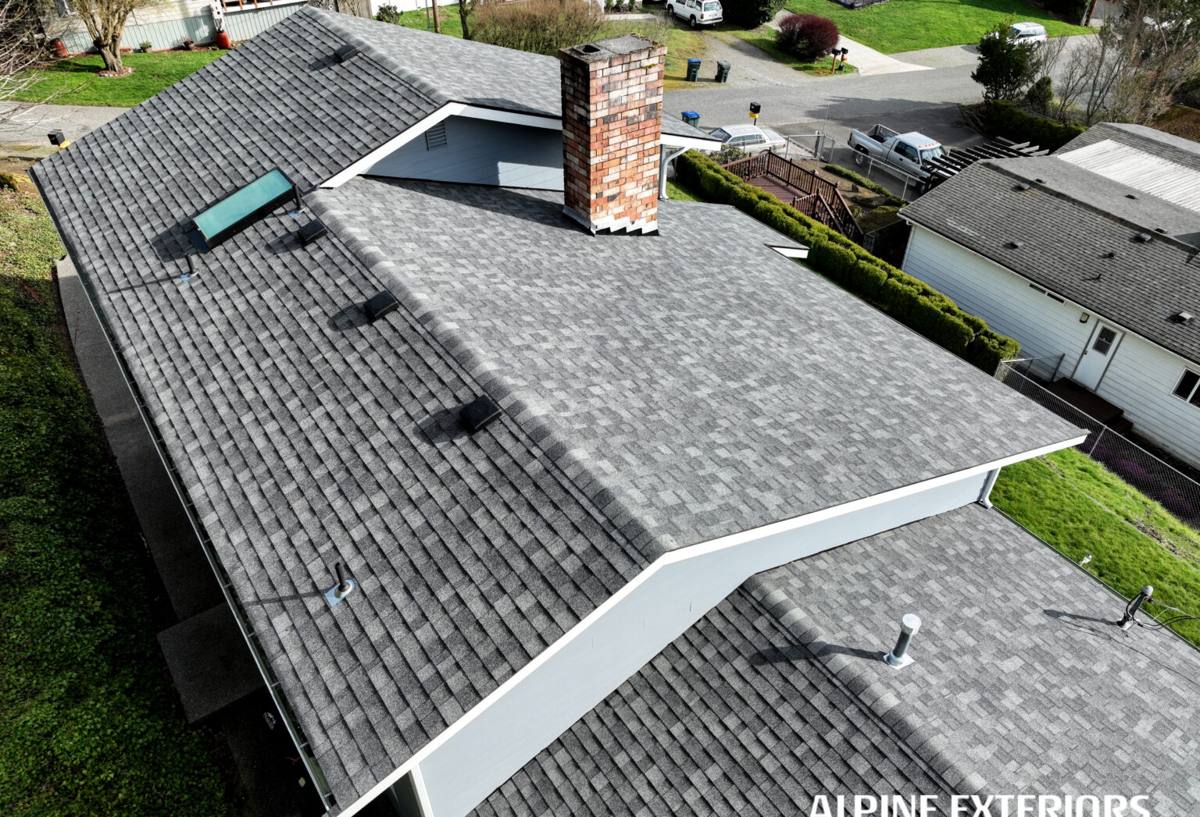
What Local Weather Actually Does to a Roof
Salt Air and Material Fatigue
Proximity to saltwater doesn't just mean a bit of corrosion on metal fasteners. Salt-laden moisture works into shingle mat fibers, accelerates the breakdown of exposed adhesive strips, and speeds up oxidation on any exposed metal flashing, vents, or fasteners. A roof that would last its full rated lifespan a few miles inland can show granule loss and brittle shingle edges years earlier this close to the water.
Driving Rain and Wind-Driven Water
Blaine's winter storms rarely come straight down. Wind-driven rain gets pushed sideways and upward under shingle tabs, around flashing laps, and into any gap that wouldn't matter in calmer weather. This is why storm damage here so often shows up as interior leaks in places that look fine from the ground — the water found a lateral path the original installation didn't anticipate.
Moss and Prolonged Moisture Retention
Shaded, north-facing slopes and roof valleys near mature trees stay damp for long stretches, especially during the wetter months. Moss doesn't just look bad — it holds water against the roofing surface, lifts shingle edges as it grows, and traps debris that blocks proper drainage. A storm that would otherwise cause minor damage can turn into a real leak when moss has already been holding moisture against the deck.
Signs Your Dakota Creek Roof Needs Storm Repair
- Missing, cracked, or curling shingles, especially along ridges and roof edges facing prevailing wind
- Granules collecting in gutters or at downspout outlets after a storm
- Water stains on interior ceilings or upper walls following heavy rain
- Visible moss buildup combined with soft or spongy-feeling roof sections
- Flashing that's bent, lifted, or separated around chimneys, vents, and skylights
- Sagging sections, especially near valleys or where moss has been present longest
- Debris punctures or dents from wind-blown branches, especially after windstorm events
Some of this damage is obvious from the ground. Some of it — lifted shingle tabs, cracked underlayment at a valley, a flashing seal that's just starting to fail — only shows up on the roof itself. That's why a proper storm damage assessment always includes a physical inspection, not just a look from the driveway.
What a Correct Storm Damage Repair Actually Involves
A rushed storm repair patches the visible symptom and leaves the underlying cause untouched. A correct one works through the roof system in order:
1. Full Roof and Attic Inspection
We check the roof surface, flashing points, and — where accessible — the attic or roof deck from underneath. Water almost always travels before it shows up as a stain, so tracing the actual entry point matters more than treating the spot where the leak became visible.
2. Deck and Structural Check
Before any new material goes down, we confirm the roof deck underneath hasn't been compromised by prolonged moisture exposure. Soft, delaminated, or rotted decking has to be addressed first — installing new shingles over a weak deck just hides the problem for another season.
3. Matching Repair to Damage Type
Wind damage, impact damage, and moisture damage each call for different fixes. Wind-lifted shingles may just need proper re-sealing or targeted replacement. Impact damage usually means full shingle or section replacement. Long-term moisture damage often requires replacing underlayment, not just the shingles on top of it.
4. Flashing and Detail Work
Storm damage repair is often won or lost at the details — chimney flashing, valley metal, vent boots, and drip edge. These are the areas most likely to fail again if they're not corrected properly, and they're also the areas most likely to get overlooked in a quick patch job.
5. Moss and Debris Cleanup
Where moss or accumulated debris contributed to the damage, we clear it as part of the repair and address drainage so water doesn't pool in the same spot again. Repairing the damage without addressing the moss just resets the clock on the same failure.
Repair vs. Replacement: How We Make the Call
Not every storm-damaged roof needs full replacement, and not every roof can be safely patched. The decision comes down to the extent of the damage relative to the roof's remaining service life.
| Factor | Favors Repair | Favors Replacement |
|---|---|---|
| Roof age | Under 12–15 years, generally sound | Approaching or past expected lifespan |
| Damage extent | Localized to one slope or section | Widespread across multiple slopes |
| Deck condition | Solid, dry decking underneath | Soft or rotted decking found during inspection |
| Moss/moisture history | Isolated, recently addressed | Long-term, affecting multiple areas |
| Prior repairs | First storm event on this roof | Repeated patches with recurring leaks |
We'll always tell you honestly which side of that table your roof falls on. If a repair will genuinely hold, we recommend the repair — a full replacement isn't the right call just because it's more work.
Why Insurance Documentation Matters Here
Storm damage claims move faster and go smoother when the damage is documented clearly and tied to a specific weather event. Before we make any repairs, we document the damage with clear notes on what we found, where, and how it's consistent with storm impact rather than gradual wear. This distinction matters to insurers, since general deterioration and moss-related aging are typically treated differently than sudden storm damage. Keeping that documentation straight from the start avoids disputes later in the claims process.
Our Process for Dakota Creek Homeowners
- Contact and scheduling — we set up an inspection time that works around your schedule, including after-storm follow-up when conditions allow safe access.
- On-site inspection — a physical walk of the roof surface plus an attic check where accessible, with photos of specific damage points.
- Written assessment — a clear explanation of what we found, what caused it, and whether repair or replacement is the right fit, with an honest cost range.
- Scheduling the work — repairs are scheduled around weather windows, since proper shingle sealing and flashing work need dry, workable conditions.
- Completed repair walkthrough — we go over what was done and what to watch for going forward, particularly around moss-prone areas.
Maintenance Habits That Reduce Future Storm Damage
- Trim back tree limbs that overhang the roof, especially anything that could drop debris in high wind
- Clear gutters and downspouts before the wet season so water has somewhere to go
- Address moss early with proper treatment rather than waiting until it's visibly thick
- Have flashing and seals checked periodically, since these fail before the shingle field usually does
- Get a post-storm inspection after any significant windstorm, even if nothing looks obviously wrong
None of this eliminates storm risk for a home this close to the water — nothing does. But it narrows the gap between a roof that shrugs off a bad winter and one that needs emergency repair in the middle of it.
Why Local Experience Matters for This Job
A crew that mostly works drier, inland areas of Washington doesn't see the same failure patterns we see routinely in Blaine and along Boundary Bay. Salt air corrosion, moss behavior on shaded coastal slopes, and the specific way wind-driven rain finds its way under flashing here are things you learn by working these roofs repeatedly, not by reading a general roofing manual. Storm damage repair done by a crew that already understands Whatcom County's climate tends to hold up better the next time weather turns, because the repair addresses the actual local cause instead of just the visible symptom.
If your Dakota Creek home has recent storm damage — or you want an honest inspection after this season's weather — we're glad to take a look. Reach out for a free, no-pressure estimate using the form below.