 Blaine Siding
 What Lynden's Climate Actually Does to a Roof
Lynden sits inland from the coast, but that doesn't mean the roof over your head gets an easy ride. Whatcom County weather still pushes salt-tinged air off Semiahmoo Bay and the Strait of Georgia inland on stormy days, and it combines with the driving rain that rolls through for months at a stretch. Add a long, damp moss season that runs from fall through spring, and you have three separate stresses working on the same shingles year-round: corrosion of exposed metal fasteners and flashing, water intrusion at every seam and penetration, and organic growth that traps moisture against the shingle surface.
None of these problems show up overnight. They accumulate. A roof that was installed correctly and is properly maintained shrugs off decades of this. A roof with a shortcut in the flashing, the underlayment, or the ventilation will show granule loss, dark streaking, and soft spots years before it should. That's the gap we're closing on this page — what a Lynden roof actually needs, and what "correct" looks like when we do the work.
Why Moss Is More Than a Cosmetic Problem Here
Moss doesn't just make a roof look neglected. Once it establishes on a north-facing slope or a shaded valley, it holds water against the shingle mat long after the rest of the roof has dried out. Over a few seasons that moisture cycle degrades the asphalt and the mat underneath, lifts shingle tabs, and works its way under the edges where wind and rain can get beneath the shingle course. In a climate where it rarely dries out completely between October and May, moss prevention has to be part of the design, not an afterthought.
Why Asphalt Shingles Still Make Sense for Lynden Homes
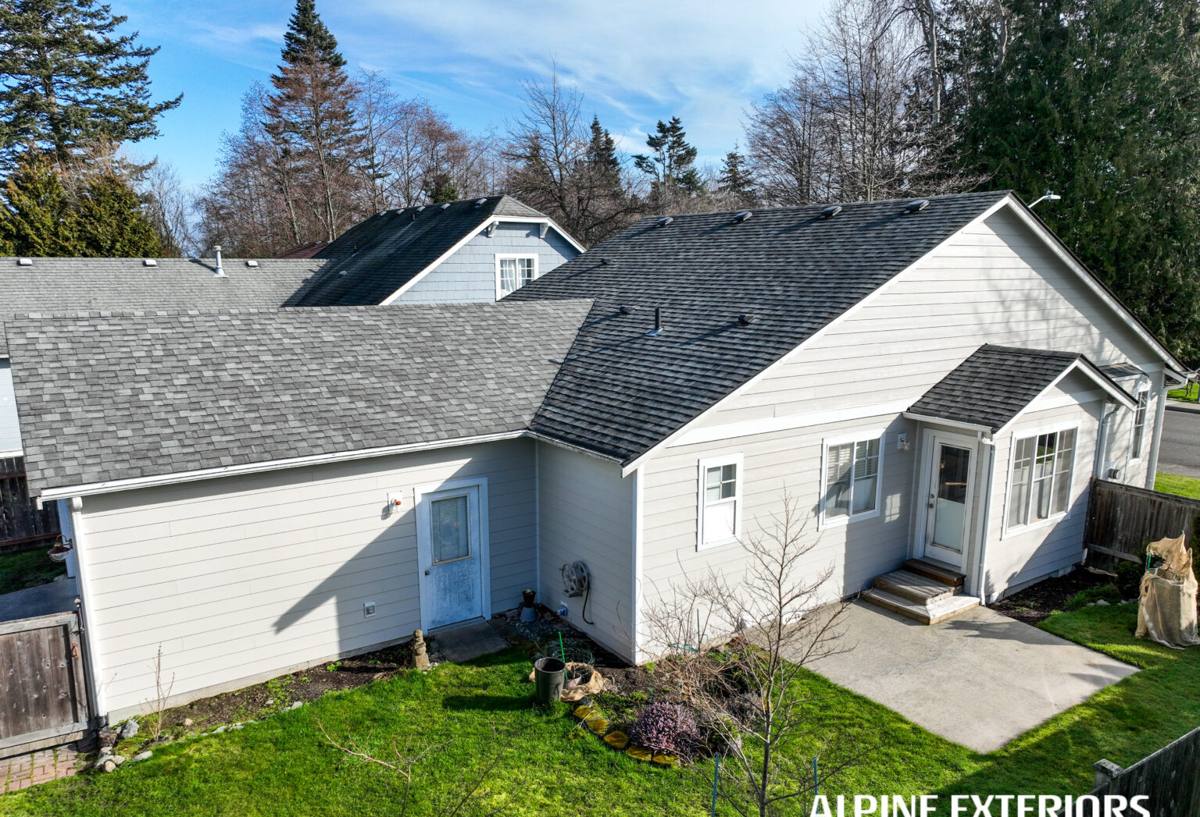
Asphalt shingle roofing remains the most common choice in this part of Whatcom County for good reason. It's a proven, well-understood system with a wide range of price points, it performs well against wind-driven rain when installed with the right underlayment and flashing details, and repairs are straightforward if something ever does go wrong. The key is matching the shingle class and the installation details to what our climate actually demands, rather than defaulting to whatever is cheapest or fastest to install.
We're not going to tell you asphalt is the only roofing material worth considering — metal and other systems have their place. But for the majority of homes in and around Lynden, a properly specified architectural asphalt shingle roof offers the best balance of upfront cost, weather performance, and long-term maintainability.
What a Correct Asphalt Shingle Job Involves
A shingle roof is a system, not a single product. Every layer has to work together, and in a wet climate the layers underneath the shingles matter as much as the shingles themselves.
Deck Inspection and Repair
Before anything goes down, the existing deck gets checked for soft spots, delamination, and old fastener damage. Any sheathing that's been compromised by a prior leak gets replaced rather than covered over. Roofing over a wet or rotted deck is the single most common cause of an asphalt shingle roof failing early, and it's not something we skip to save time.
Underlayment
Given how much rain this area sees, we use a synthetic underlayment rated for extended UV and moisture exposure across the full roof, with self-adhering ice-and-water membrane at eaves, valleys, and any low-slope transitions where wind-driven rain is most likely to work its way backward under a shingle course.
Flashing Details
Step flashing at walls and chimneys, proper valley metal, and correctly lapped drip edge at eaves and rakes are where most leaks actually start when they're done wrong. These details get more attention on a Lynden roof than they might in a drier climate, because there's simply more water looking for a way in.
Ventilation
Balanced intake at the soffits and exhaust at the ridge keeps the attic space at a stable temperature and humidity. Poor ventilation traps moisture in the attic, which shows up as premature shingle aging from underneath — a failure mode homeowners rarely notice until the damage is done.
Fasteners
Corrosion-resistant nails, installed at the manufacturer's specified pattern and count, driven flush rather than overdriven or underdriven. This sounds basic, but fastener errors are one of the most common causes of blow-offs during Pacific Northwest wind events.
| Shingle Type | Typical Lifespan | Moss/Moisture Resistance | Relative Cost |
|---|---|---|---|
| 3-Tab Asphalt | 15–20 years | Standard — benefits most from zinc/copper strips | Lowest |
| Architectural (Laminated) | 25–30 years | Better mat thickness resists moisture cycling | Mid-range |
| Impact/Algae-Resistant Architectural | 30+ years | Copper-infused granules actively resist moss and algae | Highest |
For most Lynden homes surrounded by mature trees or shaded on one side, we lean toward algae-resistant architectural shingles specifically because of the moss pressure — the extra material cost is usually offset by years of deferred cleaning and re-roofing.
Our Process, Step by Step
- On-site inspection: we walk the roof and the attic, not just look from the ground, and document deck condition, ventilation, and existing flashing.
- Written estimate: materials, tear-off scope, and any deck repair called out separately so there are no surprises once we open up the roof.
- Tear-off and deck check: full removal of old roofing, inspection of every sheet of decking, and repair before anything new goes down.
- Underlayment and flashing installation: ice-and-water membrane at vulnerable areas, synthetic underlayment across the field, new flashing at all penetrations, valleys, and walls.
- Shingle installation: laid to manufacturer specification for exposure and fastening pattern, with attention to starter courses and ridge caps, which are common weak points when rushed.
- Ventilation check and correction: intake and exhaust balanced before we close out the job, not assumed to already be adequate.
- Final walkthrough: we go over the finished roof and the cleanup with you before we consider the job done.
Ventilation and Moisture: The Detail Most Roofs Get Wrong
Whatcom County doesn't get the ice-damming problems that colder climates deal with, but the moisture side of ventilation matters just as much here. An attic that can't breathe traps the humidity generated inside the home and the moisture that migrates up through the roof deck during long wet stretches. That trapped moisture condenses, soaks into the underside of the sheathing, and slowly rots it from the inside — a failure that's invisible from the outside until it's advanced. Balanced ventilation isn't an upsell; it's a requirement we build into every re-roof.
Maintenance That Actually Extends the Life of a Lynden Roof
- Clear gutters and downspouts at least twice a year so water isn't backing up under the eaves during heavy rain.
- Have moss physically removed (not just chemically treated) from shaded slopes before it establishes a thick mat.
- Check zinc or copper control strips periodically — they lose effectiveness over time and can be supplemented.
- Trim back overhanging branches to reduce shade, debris buildup, and physical abrasion on the shingle surface.
- Inspect flashing around chimneys, skylights, and vents annually, since these are the first places a leak typically starts.
- Address small leaks immediately — a small deck repair now is far cheaper than a full deck replacement after years of hidden rot.
Signs Your Roof Needs Attention
Homeowners often wait too long because a roof "still looks fine" from the ground. A few signs worth acting on sooner rather than later:
- Granules collecting in gutters or at downspout outlets, which signals accelerated shingle wear.
- Dark streaking or thickening moss patches on north-facing or shaded slopes.
- Curling, cupping, or lifted shingle tabs, especially after a windy stretch.
- Any staining on interior ceilings or attic sheathing, even faint, which points to an active or past leak.
- Sagging in the roofline itself, which usually means deck or structural damage has already progressed.
Why Hiring a Crew That Already Works in Lynden Matters
A crew that regularly works roofs in Lynden and the surrounding Whatcom County area already knows how the local weather behaves through a full seasonal cycle — where moss tends to establish first, which roof orientations take the worst of the driving rain, and how quickly a small flashing gap turns into a real problem when it rains for weeks at a time. That local pattern recognition shows up in faster, more accurate inspections and fewer callbacks. It also means we're not guessing at permitting requirements or scheduling around weather windows that are specific to this part of the county — we plan tear-offs and installs around realistic dry-weather windows rather than optimistic ones.
Being local also means accountability. If something needs a look after the job is done, we're not a crew that drove in from out of the area and moved on. We stand behind the work because we're still here.
Getting Started
If your roof is showing its age, dealing with persistent moss, or you're just planning ahead before the next wet season sets in, we're happy to take a look and give you a straightforward assessment. There's no pressure and no obligation — just an honest read on what your roof needs and what it would cost to do it right. Reach out using the form below to schedule a free estimate.